
Close Menu
  • News
  • Industry
  • Solar Panels
  • Commercial
  • Residential
  • Finance
  • Technology
  • Carbon Credit
  • More
    • Policy
    • Energy Storage
    • Utility
    • Cummunity
What's Hot

Dutch solar owners asked to switch off during peak periods to ease the distribution crisis

June 7, 2026

The hydrogen flow: Toyota demonstrates its racing prototype on liquid hydrogen

June 7, 2026

Era of electrification exposing Australia’s weakest link

June 6, 2026
Facebook X (Twitter) Instagram
Solar Energy News
Sunday, June 7
  • News
  • Industry
  • Solar Panels
  • Commercial
  • Residential
  • Finance
  • Technology
  • Carbon Credit
  • More
    • Policy
    • Energy Storage
    • Utility
    • Cummunity
Solar Energy News
Home - Technology - Transparent solar cell made of amorphous silicon lets in more than 60% of visible light – SPE
Technology

Transparent solar cell made of amorphous silicon lets in more than 60% of visible light – SPE

solarenergyBy solarenergyOctober 10, 2025No Comments3 Mins Read
Facebook Twitter Pinterest LinkedIn Tumblr Email
Share
Facebook Twitter LinkedIn Pinterest Email

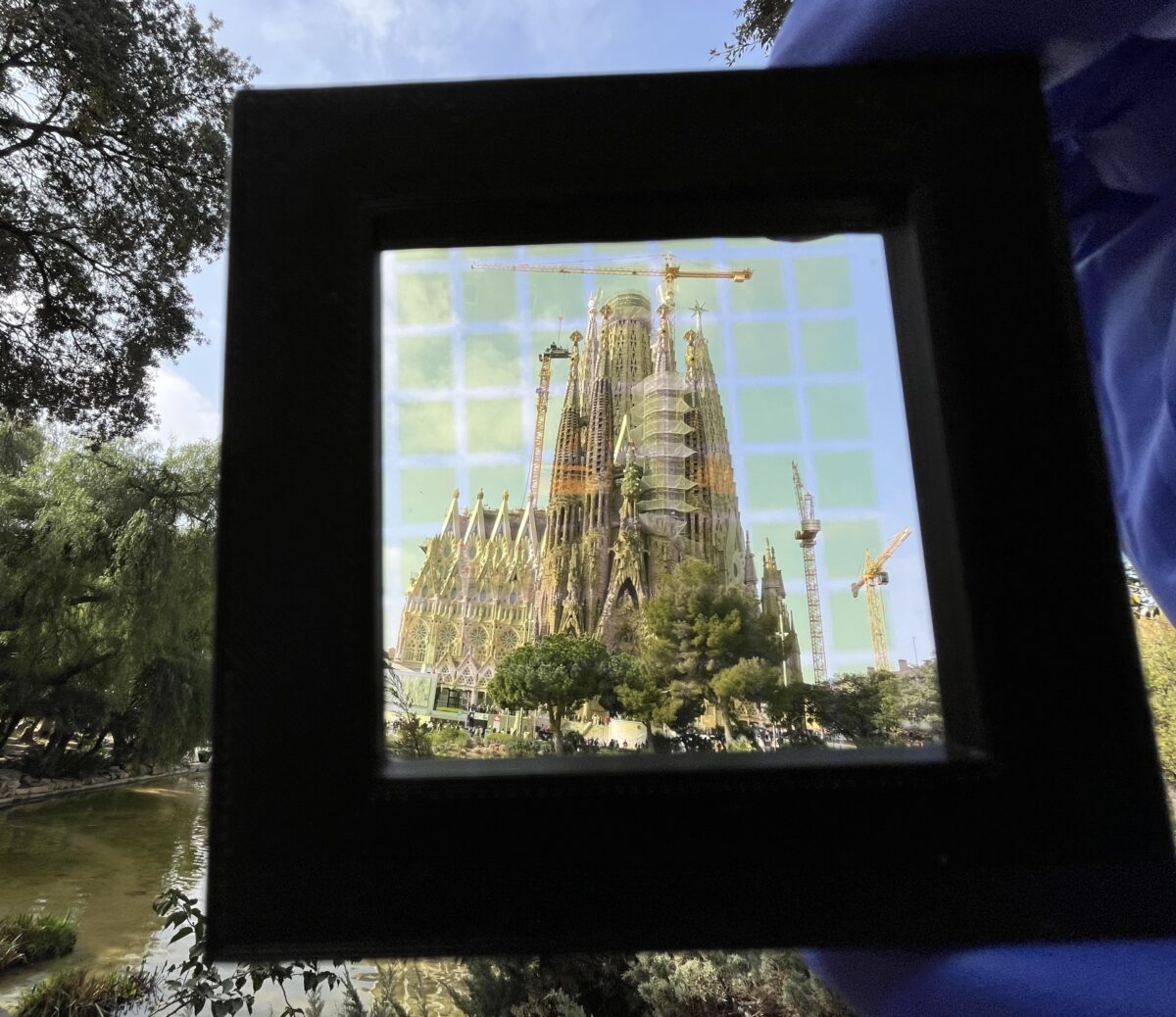
Scientists in Spain have developed an amorphous silicon solar cell that can be used in both transparent solar photovoltaics and tandem applications. The device reportedly achieves remarkable levels of efficiency and could provide an alternative to transparent organic solar photovoltaics.

October 10, 2025
Emiliano Bellini

A research group from the Spanish Universitat Politècnica de Catalunya (UPC) has manufactured a transparent solar cell based on a light absorber made of amorphous hydrogenated silicon carbide (a-Si1xcX:H) thin films.

“Our cell shows one excellent transparency of more than 50% for inorganic transparent solar photovoltaics”, said the lead author of the study, Gerard Masmitjà pv magazinenoting that amorphous silicon-based solar cells have regained interest in recent years as a promising option for implementing highly reliable transparent devices. “We have demonstrated that tuning the a-Si1xcX:H-bandgap is possible, which is not only advantageous for transparent solar cells, but could also have applications in tandem devices.”

The 0.5 cm x 0.5 cm solar cell was also built with a commercial glass substrate coated with fluorine-doped tin oxide (FTO).

The 40-45 nm a-Si1xcX:H absorber was deposited on a borosilicate glass substrate by plasma enhanced chemical vapor deposition (PECVD) with different SiH4/CH4 ratios, while a 45 nm aluminum-doped zinc oxide (AZO) hole transport layer was deposited by atomic layer deposition (ALD), which was also used to deposit a 12 nm thick hole-selective contact of vanadium oxide (V).2OX).

For the electron transport layer (ETL), the research team used a wide bandgap phosphor-doped a-Si1xcX:H movie. Diethylzinc (DEZ), Trimethylaluminum (TMA) and DI-H2O were used as precursors of zinc, aluminum and oxidizing agent.

See also  Indoor Perovskite Solar cell built with triple passion strategy achieved 37.6% efficiency - PV Magazine International

The scientists analyzed the microstructure of the a-Si1xcX:H solar cell via scanning transmission electron microscope (STEM) images recorded with the JEOL bright-field (BF) and high-angle annular dark-field (HAADF) detectors. They used a JEOL F200 TEM ColdFEG operated at 200 kV, placing samples in a JEOL beryllium double-tilt holder for energy dispersive X-ray spectroscopy (EDS).

The best solar cell fabricated with the proposed architecture achieved an energy conversion efficiency of 2.6%, an open-circuit voltage of 748 mV, a short-circuit current of 5.2 mAcm2, and a fill factor of 68%. “Higher carbon content in a-Si1xcX:H improves efficiency under indoor lighting conditions,” explains Masmitjà.

Some devices also showed average photopic transmittance (APT) values ​​ranging from 50% to 70%. This metric defines transparency to the human eye rather than providing a simple arithmetic average. It recently became a critical benchmark for applications such as solar windows and semi-transparent PV cells.

“This demonstrates that truly transparent, non-organic solar cells can be achieved while maintaining remarkable energy conversion efficiency,” the researchers said. “In addition to transparency, the integration of carbon also improves the suitability of these devices for indoor applications, as their efficiency is better maintained under low-light conditions.”

The cell was described in “Transparent solar cells based on a-Si1xcX:H alloys: from silicon to carbon-rich absorbers”, published in Renewable energy.

This content is copyrighted and may not be reused. If you would like to collaborate with us and reuse some of our content, please contact: editors@pv-magazine.com.

Popular content

Source link

See also  India's first utility-scale standalone storage project gets regulatory approval – SPE
amorphous cell lets light silicon solar SPE transparent visible
Share. Facebook Twitter Pinterest LinkedIn Tumblr Email
solarenergy
  • Website

Related Posts

Dutch solar owners asked to switch off during peak periods to ease the distribution crisis

June 7, 2026

Letter from China’s PV Industry: Arctech wins 2.1 GW solar deal

June 5, 2026

ComEd starts a new energy pilot with a solar rebate on the roof of a brewery

June 5, 2026
Leave A Reply Cancel Reply

Don't Miss
Energy Storage

Audit Germany warns of missed H2 targets – SPE

By solarenergyOctober 31, 20250

Germany’s Federal Audit Office (Bundesrechnungshof) says the country’s hydrogen strategy is falling short despite heavy…

Scientists claim that PV systems combined with thermoelectric cooling can achieve a payback period of six years

May 28, 2024

Aquila Energy optimizes Midden -Markt EPC works with data

April 14, 2025

NextPower UK ESG reaches an operating capacity of 139 MW

June 11, 2024
Stay In Touch
  • Facebook
  • Twitter
  • Pinterest
  • Instagram
  • YouTube
  • Vimeo
Our Picks

Dutch solar owners asked to switch off during peak periods to ease the distribution crisis

June 7, 2026

The hydrogen flow: Toyota demonstrates its racing prototype on liquid hydrogen

June 7, 2026

Era of electrification exposing Australia’s weakest link

June 6, 2026

‘Come out from behind your screen, our industry is ultimately about people’

June 6, 2026
Our Picks

Dutch solar owners asked to switch off during peak periods to ease the distribution crisis

June 7, 2026

The hydrogen flow: Toyota demonstrates its racing prototype on liquid hydrogen

June 7, 2026

Era of electrification exposing Australia’s weakest link

June 6, 2026
About
About

Stay updated with the latest in solar energy. Discover innovations, trends, policies, and market insights driving the future of sustainable power worldwide.

Subscribe to Updates

Get the latest creative news and updates about Solar industry directly in your inbox!

Facebook X (Twitter) Instagram Pinterest
  • Contact
  • Privacy Policy
  • Terms & Conditions
© 2026 Tsolarenergynews.co - All rights reserved.

Type above and press Enter to search. Press Esc to cancel.