

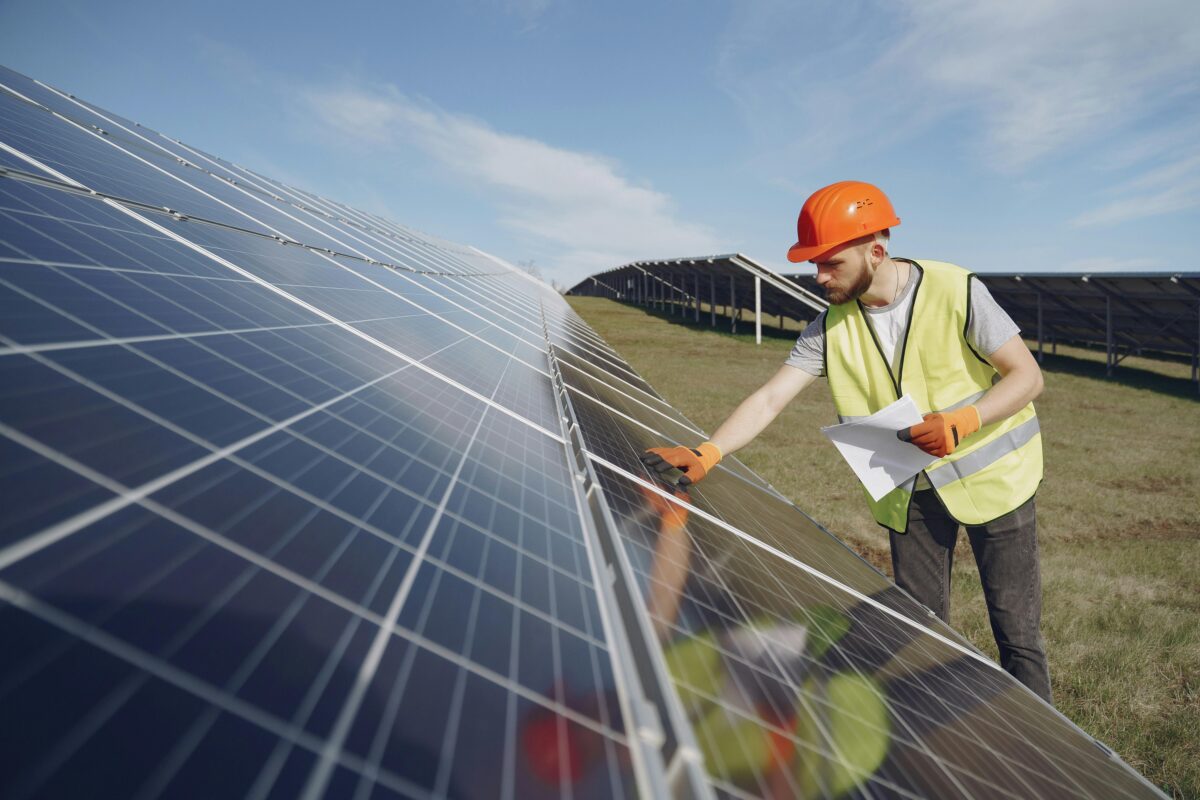
This is evident from data released on July 9, 2026 by supply chain platform Anza average price for solar panels assembled in the US stabilized at $0.30 per watt.
The platform collects data on 55 modules from 19 suppliers. It reported an interquartile range of $0.280/W to $0.325/W for the segment. The average price decreased by $0.015/W between March and April 2026. However, it recovered in May by $0.005/W. Prices remained stable in June and early July.
The pricing data is based on the enforcement of the Foreign Entity of Concern (FEOC) framework and a new tariff petition targeting South Korean manufacturing.
Chinese divestments
The FEOC framework was created under the One Big Beautiful Bill (OBBB), which was signed into law in July 2025. The law removes the right to receive investment tax credit (ITC) from any project that uses components of an entity designated as a prohibited foreign entity (PFE). A PFE is defined as a transaction in which a FEOC holds more than 25% of the equity, more than 15% of the outstanding debt, or in which multiple FEOCs jointly own more than 40%.
Chinese-owned manufacturers with U.S. facilities have been divesting assets to remain eligible for clean energy incentives.
Ownership of several domestic factories changed:
- Trina Solar sold its Texas manufacturing assets to FREYR Battery. The company renamed T1 Energy. This sale occurred after initial production began in November 2024.
- YES solar energy sold 100% equity of its 2 GW module facility in Phoenix, Arizona, to Corning Incorporated in April 2025. Corning operates the site through a subsidiary called American Panel Solutions.
- JinkoSolar sold a 75.1% stake in the Jacksonville, Florida facility to private equity firm FH Capital for $192 million. It retained a minority stake of 24.9%. This allowed it to stay below the FEOC ownership threshold.
- Long has reduced its stake in Illuminate USA, the Ohio manufacturing joint venture with Invenergy, to stay below the 24.9% threshold.
Anza stated that the commercial relationship that emerges from these sales is unique, noting that the original Chinese manufacturers often retain supply agreements, brand licensing or purchasing relationships with the facilities they sold. Anza also noted that these companies must now trade remotely with their previously scheduled lines. Research analysts at Wood Mackenzie said there is a “fundamental paradox” because the majority of essential solar energy components still come from factories owned by Chinese companies, even if they are located elsewhere. Anza added that this dynamic weakens the dominance of the four largest global suppliers in the U.S. market, which could increase complexity for buyers as new brand names enter the market or original equipment manufacturers produce multiple modules from different brands.
South Korean imports face new AD/CVD petition
On June 18, 2026, a new anti-dumping and countervailing duty (AD/CVD) petition was filed against solar cells and modules from South Korea. The petition was filed by American Manufacturers for Energy Resilience (AMER). This coalition consists of Heliene USA Inc., SEG Manufacturing Inc. and Jeffersonville PV Cells Corporation, a manufacturing subsidiary of Canadian Solar.
The petition calls for a nationwide investigation of all c-Si cell manufacturers and exporters operating in South Korea. It claims that South Korean manufacturers are circumventing existing Chinese AD/CVD orders. The petition names Hanwha Q Cells, HD Hyundai Energy Solutions and Shinsung E&G. AMER states that these companies perform only minor or insignificant processing of Chinese materials and rely on Chinese suppliers for raw polysilicon, ingots and wafers.
Anza noted that this is the first time Hanwha Q Cells has been targeted by a petition, having previously been a petitioner in both the Solar 3 and Solar 4 AD/CVD cases. According to Anza’s timeline, buyers would face CVD charges in September 2026, and AD charges could be announced from late November 2026 to mid-January 2027 if the case is heard.
Faults in technology and components
Within the US-assembled module segment followed by Anza:
- 49 of the 55 monitored modules use Tunnel Oxide Passivated Contact (TOPCon) technology.
- 6 modules use Mono PERC technology.
- 45 modules retain a Tier-1 designation.
- 32 modules have been verified as FEOC compliant.
The supply chain for these modules depends on international components. 24 of the 55 modules use Malaysian polysilicon. Domestic American polysilicon represents 15 modules, and Chinese polysilicon represents 13 modules. Cell origins span 10 different countries, with cells from Kenya (12 modules) and the Philippines (11 modules) making up the largest share.
Anza’s recommendations
The FEOC withholding threshold will increase to 45% for solar projects beginning January 1, 2027. IRS guidance issued in February 2026 confirms that FEOC compliance is mandatory for any project that begins construction in 2026 or later and wishes to claim the ITC.
Anza made the following recommendations to reduce the risk:
- Use the FEOC compliance filter on the Anza platform and select “FEOC Compliant Cells”.
- Confirm FEOC compliance status before shortlisting modules for projects beginning construction in 2026 or later.
- Hedge against Section 232 polysilicon exposure by using supplier contracts that defer full commitment until final tariff levels are confirmed.
- Monitor the Section 337 investigation and consider customs importing TOPCon cell or module deliveries before July 15, 2027.
