

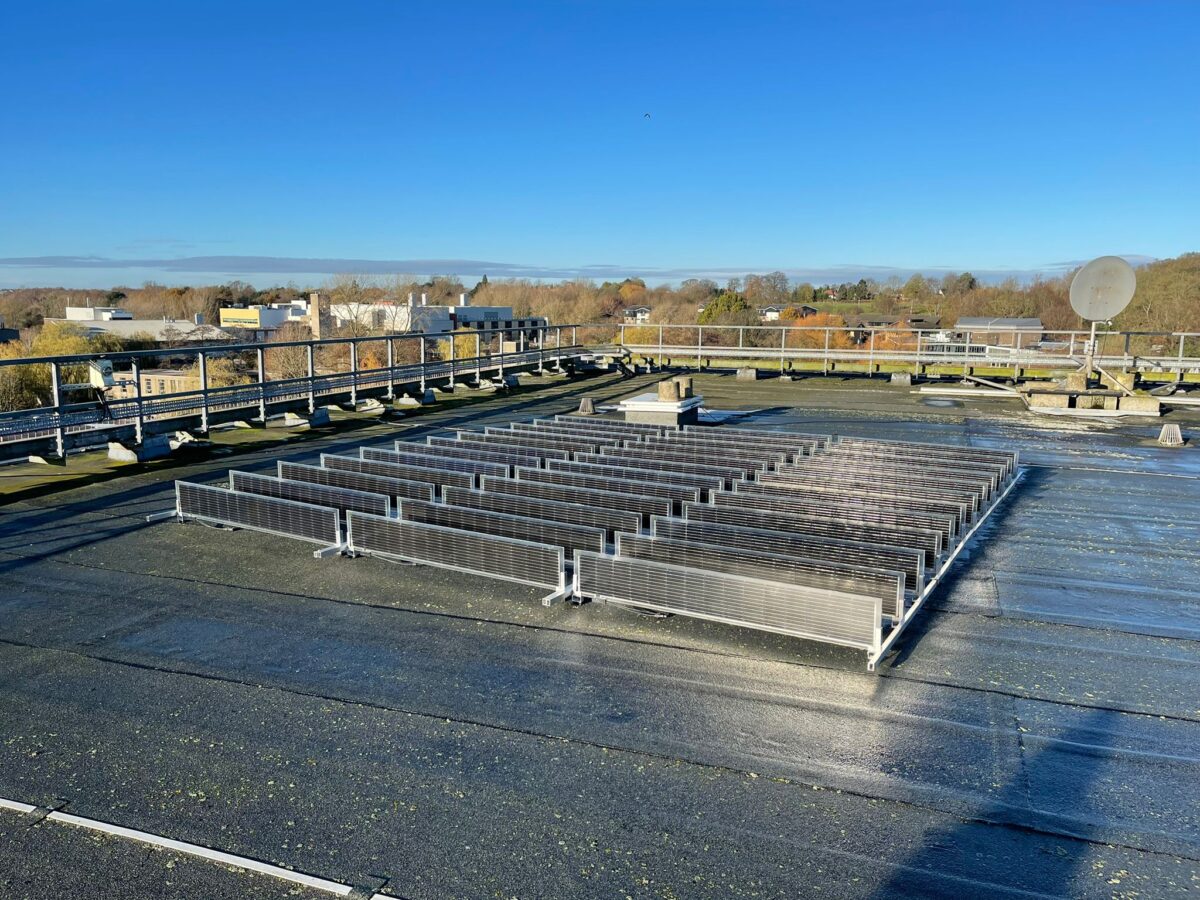
A year-long study in the UK shows that vertical bifacial PV systems achieve up to 26.91% higher yields during the morning hours compared to traditional tilted PV systems. The vertical two-sided system improved on the tilted system in all four seasons, with an average power gain of as much as 24.52% in winter.
Vertical, dual-sided rooftop PV systems can outperform conventional, tilted, single-sided rooftop PV systems in all seasons the United Kingdomas shown by a year-long study.
Research by the University of York has carried out the first empirical assessment of a vertical bifacial rooftop PV system from Norway-based vertical solar specialist Over Easy Solar in a British climate. The full findings are presented in the article “Comprehensive study of the efficiency of vertical bifacial photovoltaic systems: a UK case study”, published in the magazine Scientific reports.
The study assessed the performance of Over Easy Solar’s vertical bifacial PV system, installed on the roof of the university’s physics tower. It includes heterojunction cells with an efficiency of 22.5% and uses white gravel to reflect light to the back of the system, something traditional panel setups cannot use.
The system was monitored for a full annual cycle in 2023 and compared with a vertically mounted monocrystalline silicon monofacial PV system and a traditional tilted monofacial PV system. The Over Easy Solar system showed a 26.91% higher yield than the tilted system in the morning hours between 5:30 AM and 9:00 AM and a 22.8% higher yield in the hours between 5:00 PM and 8:30 PM.
Keelin Currivan, international customer solutions advisor at Over Easy Solar, explained pv magazine how these results highlight the double peak benefit provided by vertical bifacial PV.
“While traditional tilted panels struggle with midday saturation, peaking when the grid is often full and prices are low, our vertical bifacial system shifts production to when it is needed most,” Currivan said. She added that these peaks correspond to residential peaks caused by demand for heating, cooking and electric vehicles, reducing the need for battery storage and easing grid congestion.
Over Easy Solar’s vertical bifacial PV system outperformed both other test systems over the past four seasons. It achieved a relative gain of 14.77% over the traditional tilted system in summer, increasing to 19.32% in spring, 20.27% in autumn and 24.52% in winter.
“Vertical orientation is the superior geometry for the British and Irish climate as it is optimized for low-angle winter sun and diffused light,” Currivan explains. “Even against a vertical monofacial system, the bifacial version gains an additional 12.45% in winter, proving that capturing back reflection is critical.”
On a particularly strong day, May 7, Over Easy Solar’s system produced 4.92 kWh, approximately 25.38% more energy than the tilted system during the day. The authors of the research paper, based at the University of York, add that their findings “underline the unparalleled ability of the vertical bifacial PV system to efficiently harness solar energy regardless of seasonal variations.”
“The design not only maximizes land use, but also integrates seamlessly with modern architectural landscapes, adding aesthetic value to the functional benefits,” they concluded. “The system’s bifacial technology, capable of capturing solar radiation from both sides, significantly increases energy yield, making it a powerful solution for regions with variable sun exposure and reflective environments.”
Currivan added that the higher yield in expensive months also leads to a faster payback period, despite higher upfront costs. She estimated the initial cost of a vertical bifacial PV system at GBP1,200 ($1,630)/kW, compared to GBP900/kW for a traditional system. “The higher yield results in an estimated GBP1,221.13 in additional annual savings per 1,500 kWh baseline in Great Britain, based on GBP0.28/kWh prices,” Currivan explains.
Over Easy Solar’s vertical bifacial system was also subjected to computational fluid dynamics simulations during the tests. The system maintained negligible lift forces at wind speeds of around 60mph, which Currivan says is a crucial structural advantage for windy coastal areas in Britain and Ireland.
Currivan said pv magazine About Easy Solar uses the research results to drive expansion into the British and Irish markets. “I was surprised at how applicable these systems are to the UK and Irish markets,” she said. “In Norway and in colder climates these systems are the only viable ones due to the amount of snow, but even in this climate they hit several important points, from seasonal gains to mitigating network problems to giving the double peak.”
Earlier this month, Over Easy Solar installed its first vertical solar energy installation on the roof on the American market. The company’s previous case study analysis found that vertical roof panels outperform conventional roof systems during snow months.
This content is copyrighted and may not be reused. If you would like to collaborate with us and reuse some of our content, please contact: editors@pv-magazine.com.
