

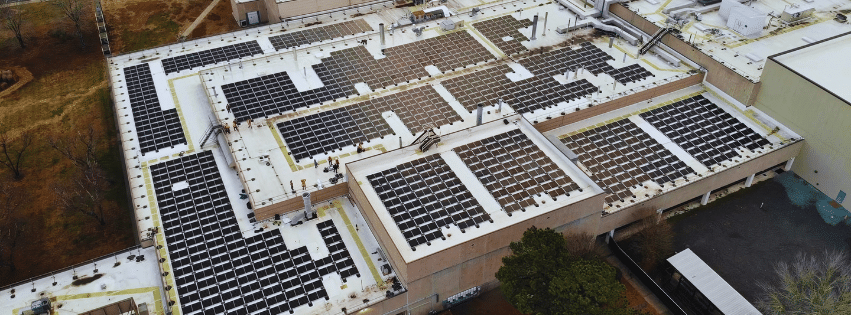
Installing a solar energy system at your business is a significant investment, but one that can provide substantial financial returns. You can slash your solar costs by up to 50% by claiming all available tax credits and incentives. Two key tools businesses can understand are bonus depreciation and the Modified Accelerated Cost Recovery System (MACRS).
Key Points:
- With bonus deprecations your total savings is the same
- The earlier you install your system with bonus depreciation the more you save up front
- If cash flow or immediate tax relief is important, installing sooner (while bonus depreciation is higher) is more advantageous.
What is Bonus Depreciation?
Bonus depreciation allows businesses to claim an immediate tax deduction for a large portion of their solar investment in the first year, rather than spreading the deduction out over the system’s lifetime. It’s a valuable incentive that lets you recover your capital investment faster.
“Bonus depreciation is a great way for businesses to accelerate the return on their solar investment,” said Usman Noor, owner at 8MSolar. “By taking that big deduction up front, you free up capital to reinvest in your business much sooner.”

How Bonus Depreciation Has Changed
The Tax Cuts and Jobs Act of 2017 made important changes to bonus depreciation. For solar systems installed between 2017-2022, businesses could deduct 100% of the system cost in year one. Starting in 2023, the allowed first-year deduction decreases by 20% each year:
– 2023: 80% deduction
– 2024: 60% deduction
– 2025: 40% deduction
– 2026: 20% deduction
– 2027 onwards: 0% (bonus depreciation phases out)
Acting sooner maximizes your potential tax benefits from bonus depreciation.
Combining Bonus Depreciation with the ITC and MACRS
In addition to bonus depreciation, businesses can claim the solar Investment Tax Credit (ITC). The ITC allows you to claim 30% of your solar installation costs as a tax credit.
When you claim the ITC, you must reduce the depreciable basis of your solar asset by half the ITC amount. So with the 30% ITC, your depreciable basis is reduced by 15% to 85% of the system cost.
You then recover this 85% through MACRS depreciation. MACRS allows you to depreciate your solar investment over a five-year schedule. In essence, you get to deduct 85% of your solar costs from your taxable income over five years.
By combining bonus depreciation, the ITC, and MACRS, you can dramatically reduce your business’s tax liability in the first year of your solar investment and accelerate your system’s payback period.
Calculating Your Depreciation Benefit
To calculate your specific first-year depreciation benefit, you need to know:
- The gross cost of your solar installation
- The ITC percentage (currently 30%)
- Your business’s effective tax rate
Here’s an example:
Year: 2023
Solar system cost: $100,000
ITC: 30%
Corporate tax rate: 21%
Calculate your depreciable basis:
$100,000 x 85% (100% cost – 50% of 30% ITC) = $85,000
Your first-year depreciation amount is:
$85,000 x 80% (2023 bonus depreciation rate) = $68,000
Calculate your tax savings:
$68,000 x 21% (corporate tax rate) = $14,280
So in this example, you would save $14,280 on your taxes in the first year thanks to bonus depreciation. With the standard MACRS schedule, you depreciate the remaining $17,000 of your cost basis, saving a smaller amount each year.
Using the $100,000 system installation example these are the expected year-one savings with Bonus Depreciation, by year:
Earnings from Depreciation (Tax Savings)
| Year of Installation | First-Year Deduction | First-Year Tax Savings | Remaining Deduction Over 5 Years | Remaining Tax Savings | Total Tax Savings |
| 2023 | $68,000 (80%) | $14,280 | $17,000 (20%) over 5 years | $3,570 | $17,850 |
| 2024 | $51,000 (60%) | $10,710 | $34,000 (40%) over 5 years | $7,140 | $17,850 |
| 2025 | $34,000 (40%) | $7,140 | $51,000 (60%) over 5 years | $10,710 | $17,850 |
| 2026 | $17,000 (20%) | $3,570 | $68,000(80%) over 5 years | $14,280 | $17,850 |
Starting in 2027, bonus depreciation will no longer apply. Businesses will instead use the standard 5-year MACRS depreciation schedule for commercial solar projects.
Commercial Solar Installations with 8MSolar
8MSolar provides custom solar quotes and financing solutions for solar projects for businesses and nonprofits of all sizes. With current tax incentives, solar provides an excellent return on investment and rapid payback for most organizations.
To see how much your business could save with solar, contact 8MSolar for a free consultation and quote. Our experienced team will design an optimal solar solution for your specific energy needs and budget. Don’t miss out on these valuable tax benefits – start your solar journey with 8MSolar today.
