

Twelve photovoltaic storage systems with a capacity of 5 kW or 10 kW were included in the comparison, including several new products, all of which achieved efficiency class A. A new study – which also examines efficiency losses when storing electricity from the grid – highlights the importance of highly efficient battery storage. The researchers also examined the warranty conditions of the devices.
By ESS news
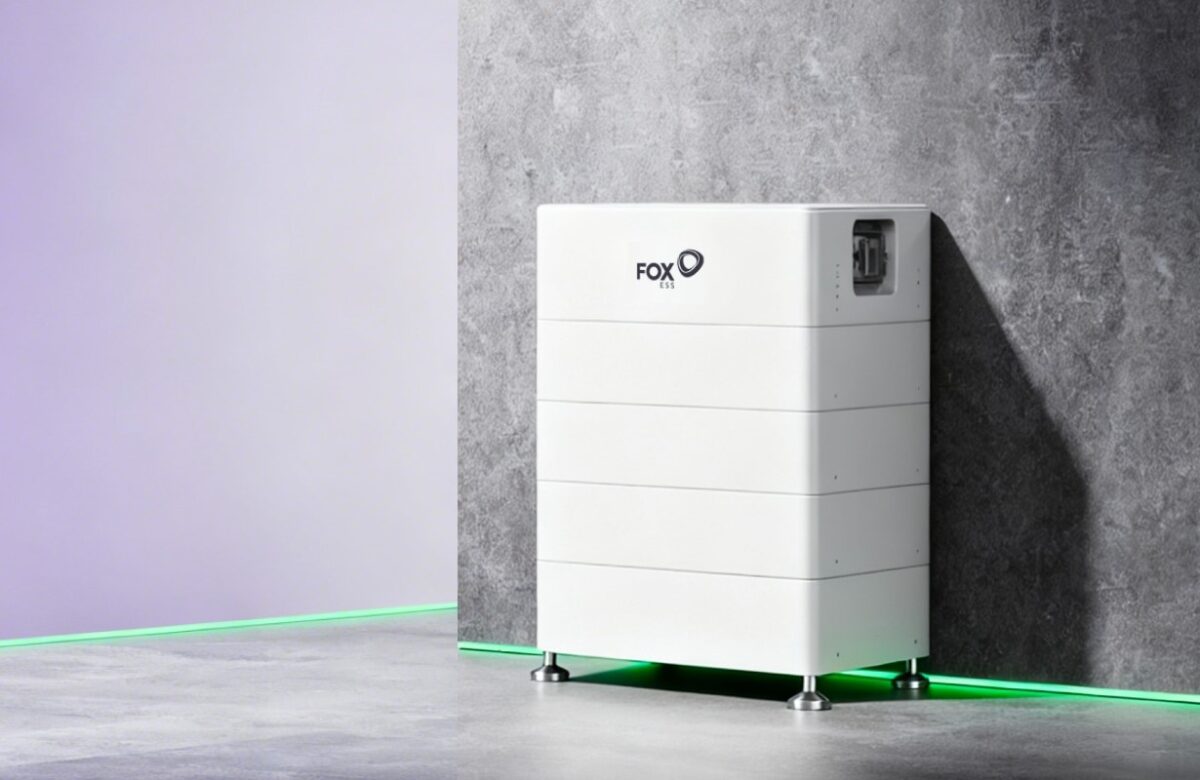
Fox ESS is the new test winner in the ‘Energy Storage Inspection’, which the Berlin University of Applied Sciences (HTW Berlin) carried out for the first time in collaboration with Aquu. Aquu is a spin-off of HTW, founded by Johannes Weniger, who previously oversaw the university’s annual storage inspection.
This year, a total of twelve photovoltaic storage systems competed in four different categories. The evaluation was carried out separately for 5 kW and 10 kW products, further distinguishing between AC and DC coupled systems. To ensure comparability, the results were assessed using the System Performance Index (SPI).
Fox ESS’s 10 kW DC system achieved a new record with an SPI of 97%. According to test results published on Thursday, this made the system 3.5 times more efficient than the worst performing system in the comparison. The storage system, equipped with the 10 kW hybrid inverter “PQ-H3-Ultra-10.0”, impressed the testers with a very high average efficiency of 97.6% and a low standby power consumption of only 4 watts.
Test winner – category 10 kW, storage inspection 2026
However, storage systems from RCT Power, Energy Depot, Fronius and Kostal (DC) in combination with BYD also achieved SPI scores above 95%, earning efficiency class A. The Kostal AC system in combination with BYD narrowly missed this threshold with 94.3% and was assigned efficiency class B.
Two other systems tested performed significantly worse, achieving SPIs of 91.9% (efficiency class D) and 89.3% (efficiency class G). Their manufacturers opted for anonymized publication of the results. The testers attributed the weaker performance of one system to high losses in the battery storage unit and high standby power consumption of 64 watts, which negatively affected overall system efficiency.
Test winner – category 5 kW, storage inspection 2026
In the 5 kW category, the inspection again made a distinction between DC and AC coupled systems. The multi-level system from SAX Power took the lead in this class with an SPI of 93.2%, making it the test winner among AC devices.
Among systems with hybrid inverters, SMA again achieved the highest score, reaching 92.8% with its “Sunny Boy Smart Energy 5.0” in combination with the “Home Storage 6.5” battery. Closely behind was the combination of Kostal and BYD, which was tested for the first time, with an SPI of 92.7%.
For next year, the testers announced the introduction of a 15 kW storage inspection. Manufacturers offering battery systems with a storage capacity between 16 and 24 kWh can participate.
“The registration phase is now open: manufacturers of AC and DC coupled storage systems with battery and hybrid inverters can immediately register to participate in the new 15 kW storage test,” said Johannes Weniger, founder and CEO of Aquu.
However, the researchers are not just expanding the scope in terms of performance classes. Last year they examined energy management systems for the first time, and this year the scientists investigated how low storage losses must be to make charging batteries with electricity from the electricity grid – for example under dynamic rates – financially feasible.
According to Weniger, conversion losses are the decisive factor. The researchers illustrated this with a typical winter scenario in which a battery is charged overnight with electricity from the grid at €0.25/kWh and the stored energy is used in the evening when electricity costs €0.35/kWh.
“In this case, storing electricity from the grid is only beneficial to the household if the inverter and battery losses are less than 29%,” the report authors said. Storage inspection explained. In other words, the overall system efficiency must be higher than 71% for the strategy to be worthwhile.
The test results showed that not all battery storage systems meet this threshold. “The price difference between charging and discharging periods is often not large enough to compensate for the losses of the battery system,” explains Nico Orth, head of the electricity storage inspection at HTW Berlin.
The study provides further details on the maximum allowable conversion losses under different electricity price scenarios.
In addition to efficiency, the testers also examined the warranty conditions of 20 well-known manufacturers, which revealed some significant differences. For example, guaranteed remaining battery capacity during the warranty period ranged from 60% to 85%, with higher values being more beneficial to storage system operators.
However, in the event of damage, unpleasant surprises may arise, making it important to check the small print carefully. “Favorable warranty conditions can often be recognized by the fact that the manufacturer does not impose extensive documentation requirements and covers the costs of replacement in the event of a defect,” says Nico Orth.
This content is copyrighted and may not be reused. If you would like to collaborate with us and reuse some of our content, please contact: editors@pv-magazine.com.
