

Following a ministerial statement from Claire Coutinho, Minister of Energy Security, urging municipalities not to approve building permits for solar farms on prime agricultural land, we are seeing a government-led push for rooftop solar.
Coutinho’s statement reads: “I want to see more solar energy on roofs and, where that is not possible, that agricultural land is protected and that the cumulative impact on local villages is taken into account, where they are faced with a large number of applications for solar parks.”
The suggestion is that rooftop solar will provide the generation capacity needed to reach net zero by 2050; when it comes to residential solar, permitted development applies in almost all cases.
However, as the independent consultant noted in its report identifying Britain’s solar hotspots, urban areas tend to see low domestic solar installations, partly due to the planning restrictions on historic buildings.
But are these barriers really an important barrier to solar energy in monumental buildings?
Key barriers to wider adoption
A review led by the Departments for Energy Security and Net Zero (DESNZ) took place in early 2024; Leveling up, Housing and Communities (DLUHC); Media and sport have identified planning regulations as one of the main obstacles preventing the wider adoption of solar panels.
Dubbed Retrofitting historic houses for energy efficiency: an overview of the barriers, the publication explained that “obtaining planning permission or permission for a listed building took ‘too long’, which not only led to frustration but could also lead to missing out on financial support. It was suggested that some people are put off from pursuing home renovation measures because they feel the planning process is too complex and uncertain to navigate.”
The review cited Kensington and Chelsea Council’s Local Listed Building Consent Order (LLBCO) as a positive example of how planning could be approached more broadly. It said expanding such provisions is necessary due to “significant differences” in the way solar photovoltaic applications are handled across the country, “sometimes due to poor planning knowledge and/or practices”.
As a result, the government has set out its intention to streamline the process of installing solar panels on several historic buildings across the UK. Historic England responded in March 2024 with an article titled Considerations when planning a PV installation.
It notes that the impact an installation will have on a listed building must be taken into account; this consideration was made in the Kensington and Chelsea LLBCO under the condition that solar panels should not face the road and should not protrude more than 20 cm.
The magnitude of the problem
In the sample examined in the DESNZ study, the perception that obtaining consent is slow was not supported. Eight weeks was normal, with a few exceptions.
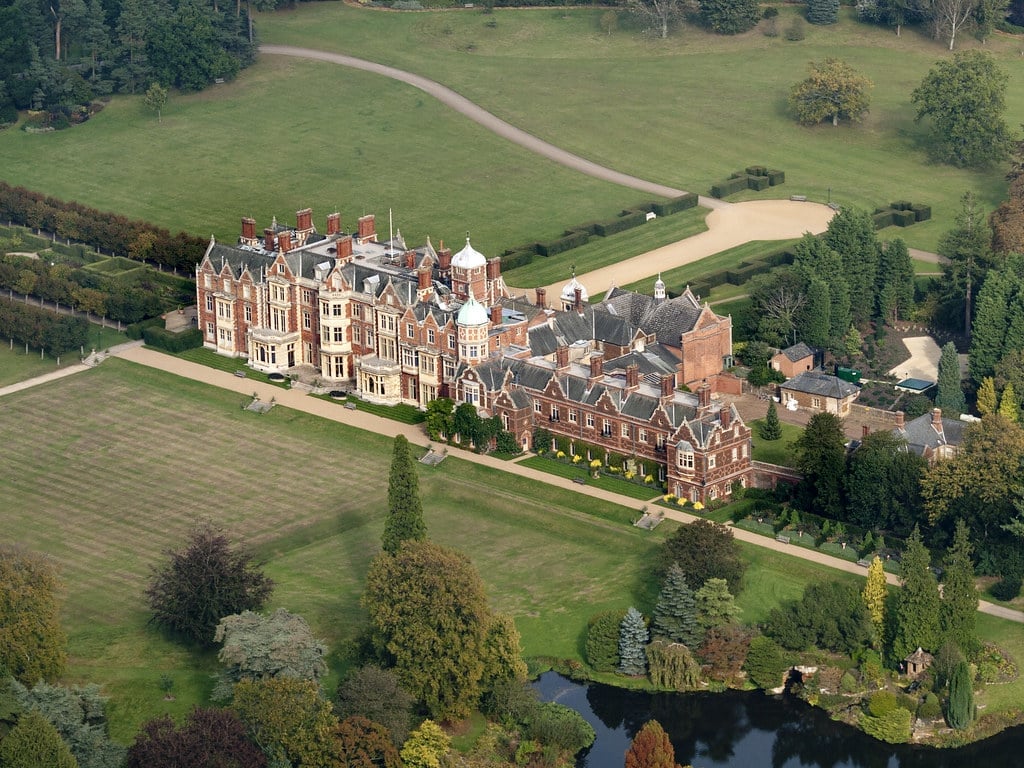
Despite the challenges, solar energy continues to be installed on historic buildings across the UK. Recently, Sandringham House submitted plans to develop a solar and battery storage facility for use on the estate.
The application, submitted to the Borough Council of King’s Lynn & West Norfolk, would see around 2,000 panels installed on land currently used as horse pasture. The cumulative generation capacity would be 2.1 MW. In addition, solar panels have already been installed on the roof of the building itself.
In March 2023, it was revealed that one of the world’s most iconic cathedrals, York Minster, would install solar panels on its roof following approval by the City of York Council and the Cathedrals Fabric Commission for England.
Commenting on landmark buildings, CEO of the Global Solar Council Sonia Dunlop said Current±: “Installing PV on historic buildings must of course be done with the greatest respect for the heritage and history that these buildings represent.
“The design of the installation must be carefully considered to be consistent with the existing roof and facades of buildings, and in some cases BIPV may be suitable. Most importantly, planning restrictions must be proportionate. Solar Energy Great Britain Beautiful solar energy campaign a few years ago showed how solar PV can be installed in a way that is visually appealing and fits in with the local built environment.”
Edinburgh Castle had solar panels installed on its roof in 2022 by AES, which also installed solar thermal on Balmoral Castle Royal Estate. The 31.5 kWp system is surrounded by a high parapet, meaning the panels are not visible from the castle grounds or other vantage points in the city.
Dunlop added: “We are keen for the Global Solar Council to ensure that permitting processes for small-scale solar around the world are commensurate with buildings and local environments.
“Us Empowering people with solar energy campaign just did that, with a comparative analysis of distributed solar policy frameworks around the world. I am sure that the rest of the world can learn a lot from the British regime in this area.”
Houses of the future do not need to be renovated
The government aims to introduce new building standards for homes built from 2025, which, according to the MCS Foundation, should ensure “meaningful use of solar panels on the roof of all new homes”.
A survey of MPs conducted by the foundation showed that almost eight in ten (79%) believe all new homes should have solar panels on their roofs. Although construction involves additional costs, the long-term savings (and avoidance of retrofit work) ultimately justify the upfront costs.
As part of its response to the government’s consultation on the Future Homes Standard and Future Buildings Standard in December 2023, Solar Energy UK estimated that solar installations increase housebuilders’ costs by an average of £6,200. However, annual bills will be reduced by an estimated £910-£2,120 per year.
In January, the trade association praised the British government’s intention to simplify solar installations on listed buildings. It estimated the change would affect 350,000 sheltered homes and 2.8 million for conservation.
Gareth Simkins, senior communications advisor for Solar Energy UK, points out that the right action to improve a building’s sustainability should be assessed individually. Solar panels are often suitable for cathedrals, such as King’s College Chapel and York Minster.
Speak with Current±, he said: “There are certain circumstances where a building is so exceptional that you can’t put solar panels on it; there are circumstances where this is appropriate because it doesn’t affect the building as you see it from the ground.”
Is the absorption of solar energy affected?
According to Simkins, Solar Energy UK would like to see a policy similar to the LLBCO in Kensington and Chelsea nationally.
“Either municipal councilors or the Minister of Foreign Affairs can give the order. [Simkins] “I would like to see it passed by the government, which would be a lot easier than hundreds of councilors doing it individually.”
So far there are no official figures showing how residential solar uptake has been affected by the LLBCO in West London. The city’s poor performance as a solar hotspot – with only 0.25% of households opting for solar panels in 2023/2024 – suggests that more factors are at play. City properties also have to take into account a lack of space and a high proportion of rental properties, which obviously affects take-up.
Unfortunately, there is no short answer to the mystery of monumental buildings. Reducing red tape will likely only go so far in increasing solar energy adoption. What is needed is a sympathetic solar energy policy that takes into account a variety of factors, rather than a general policy for roofs, monumental buildings and Agri-PV. However attractive the benefits are, ultimately the UK’s route to net zero is unlikely to be entirely dependent on heritage conservation legislation.
