
Close Menu
  • News
  • Industry
  • Solar Panels
  • Commercial
  • Residential
  • Finance
  • Technology
  • Carbon Credit
  • More
    • Policy
    • Energy Storage
    • Utility
    • Cummunity
What's Hot

The UK government has urged to ensure that plug-in solar is properly regulated

July 22, 2026

Cornwall Insight cuts price ceiling forecast after Burnham’s VAT cut

July 22, 2026

SmartestEnergy, Greentech ink CfD PPA for the Kent solar project

July 22, 2026
Facebook X (Twitter) Instagram
Solar Energy News
Thursday, July 23
  • News
  • Industry
  • Solar Panels
  • Commercial
  • Residential
  • Finance
  • Technology
  • Carbon Credit
  • More
    • Policy
    • Energy Storage
    • Utility
    • Cummunity
Solar Energy News
Home - News - Dimethylacridine stimulates perovskite solar cells
News

Dimethylacridine stimulates perovskite solar cells

solarenergyBy solarenergyJuly 28, 2024No Comments2 Mins Read
Facebook Twitter Pinterest LinkedIn Tumblr Email
Share
Facebook Twitter LinkedIn Pinterest Email

Dimethylacridine stimulates perovskite solar cells


Perovskite solar cells (PSCs) are praised for their remarkable performance and simple manufacturing process. However, traditional hole transport layers (HTLs) such as poly(triarylamine) (PTAA), nickel oxide (NiOx), and poly(3,4-ethylenedioxythiophene)-poly(styrene sulfonate) (PEDOT) have inherent disadvantages that hinder their efficiency and stability. . These materials often face issues such as hydrophobicity, high reactivity and acidity, which negatively affect PSC performance. Therefore, there is a critical need to develop new HTLs that can overcome these limitations and further improve PSC capabilities.

A research team from Yunnan University and University of Science and Technology of China has developed a novel dimethylacridine-based self-assembled monolayer (SAM), [2-(9,10-dihydro-9,9-dimethylacridine-10-yl)ethyl] phosphonic acid (2PADmA), for use as a hole transport layer in inverted PSCs. The study (DOI: 10.26599/EMD.2024.9370038) was published on June 25, 2024 in Energy Materials and Devices.

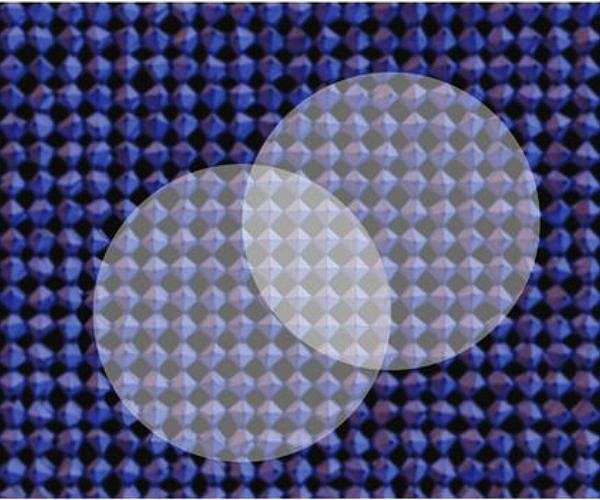
The researchers synthesized the novel dimethylacridine-based SAM, 2PADmA, and used it as a hole-transporting layer in inverted PSCs. This SAM modulates perovskite crystallization, enhances carrier transport, passivates defects, and reduces non-radiative recombination. The 2PADmA-based devices achieved a power conversion efficiency (PCE) of 24.01%, significantly higher than the 22.32% PCE of devices using the commonly used 2PACz SAM. The improved performance is mainly due to an improved fill factor (FF) of 83.92% compared to 78.42% for the 2PACz-based devices. Furthermore, the 2PADmA-based devices showed better stability, retaining approximately 98% of their initial PCE after 1080 hours of storage in the dark and 87% after 400 hours of heating at 85 C, demonstrating superior performance and durability.

Dr. Bing Cai, the principal investigator from Yunnan University, said: “The development of the 2PADmA SAM represents a significant advancement in the field of PSCs. This new SAM not only improves the efficiency and stability of PSCs, but also provides a new approach to design of advanced HTLs for future solar cell technologies.”

See also  The Massachusetts legislature passes a new climate bill that includes housing, allowing for reforms

The innovative 2PADmA SAM offers new opportunities for improving the efficiency and stability of PSCs, making them more viable for commercial applications. This development could lead to more efficient and sustainable solar energy systems, which would support the global shift to renewable energy and contribute to the fight against climate change.

Research report:Dimethylacridine-based self-assembled monolayer as hole transport layer for high-efficiency inverted perovskite solar cells


Source link

cells Dimethylacridine perovskite solar stimulates
Share. Facebook Twitter Pinterest LinkedIn Tumblr Email
solarenergy
  • Website

Related Posts

The UK government has urged to ensure that plug-in solar is properly regulated

July 22, 2026

SmartestEnergy, Greentech ink CfD PPA for the Kent solar project

July 22, 2026

Pennsylvania passes law establishing solar decommissioning plans

July 21, 2026
Leave A Reply Cancel Reply

Don't Miss
Policy

$2.4 million in grants distributed to 10 Massachusetts nonprofits going solar

By solarenergyJuly 6, 20260

The third round of grants under the Massachusetts’ Dept. of Energy Resources’ Solar Program for…

California reaches new milestone with EV chargers – SPE

September 3, 2024

Worldwide PV installations can hit 655 GW this year, says Solarpower Europe – PV Magazine International

May 6, 2025

Spanish startup uses batteries made from used EV devices on a large scale – SPE

January 6, 2025
Stay In Touch
  • Facebook
  • Twitter
  • Pinterest
  • Instagram
  • YouTube
  • Vimeo
Our Picks

The UK government has urged to ensure that plug-in solar is properly regulated

July 22, 2026

Cornwall Insight cuts price ceiling forecast after Burnham’s VAT cut

July 22, 2026

SmartestEnergy, Greentech ink CfD PPA for the Kent solar project

July 22, 2026

Flexibility as an asset

July 22, 2026
Our Picks

The UK government has urged to ensure that plug-in solar is properly regulated

July 22, 2026

Cornwall Insight cuts price ceiling forecast after Burnham’s VAT cut

July 22, 2026

SmartestEnergy, Greentech ink CfD PPA for the Kent solar project

July 22, 2026
About
About

Stay updated with the latest in solar energy. Discover innovations, trends, policies, and market insights driving the future of sustainable power worldwide.

Subscribe to Updates

Get the latest creative news and updates about Solar industry directly in your inbox!

Facebook X (Twitter) Instagram Pinterest
  • Contact
  • Privacy Policy
  • Terms & Conditions
© 2026 Tsolarenergynews.co - All rights reserved.

Type above and press Enter to search. Press Esc to cancel.