
Close Menu
  • News
  • Industry
  • Solar Panels
  • Commercial
  • Residential
  • Finance
  • Technology
  • Carbon Credit
  • More
    • Policy
    • Energy Storage
    • Utility
    • Cummunity
What's Hot

Why the UK solar industry needs to own its safety story

April 23, 2026

Fraunhofer ISE develops colored film technology for patterned solar panels

April 23, 2026

Thermoacoustic heat pumps are on the verge of commercial breakthrough – SPE

April 23, 2026
Facebook X (Twitter) Instagram
Solar Energy News
Thursday, April 23
  • News
  • Industry
  • Solar Panels
  • Commercial
  • Residential
  • Finance
  • Technology
  • Carbon Credit
  • More
    • Policy
    • Energy Storage
    • Utility
    • Cummunity
Solar Energy News
Home - Solar Industry - Improving the performance of perovskite solar cells with conductive adhesive ink
Solar Industry

Improving the performance of perovskite solar cells with conductive adhesive ink

solarenergyBy solarenergyMay 6, 2024No Comments3 Mins Read
Facebook Twitter Pinterest LinkedIn Tumblr Email
Share
Facebook Twitter LinkedIn Pinterest Email

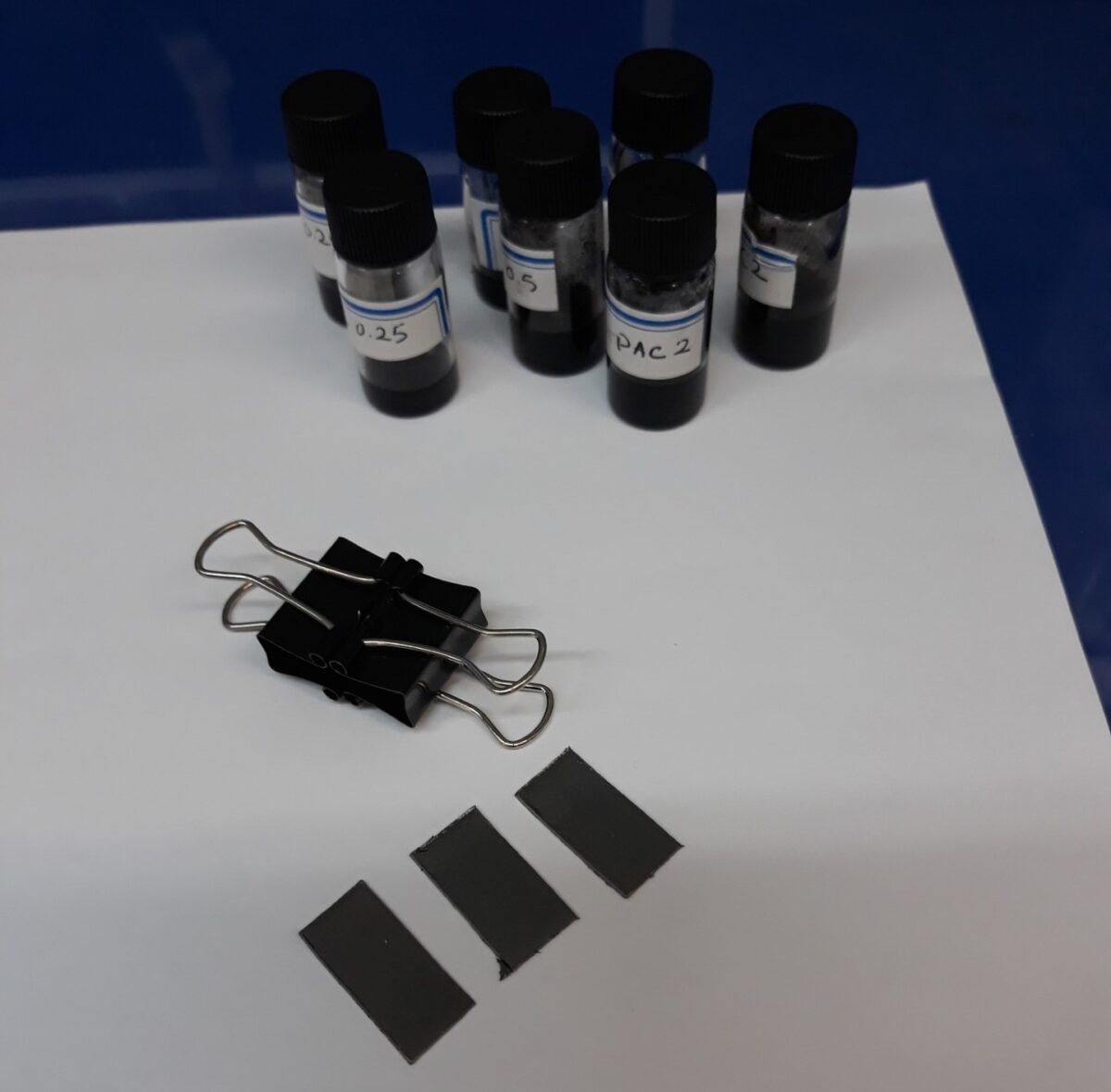
The new conductive adhesive ink, invented by researchers from Iran, is made of polymethyl methacrylate (PMMA) and is used as an intermediate layer between the hole transport layer of the cell and carbon foil. It reportedly ensures higher cell stability while offering remarkable efficiency.

May 6, 2024 Emiliano Bellini

A group of scientists led by Sharif University of Technology in Iran have developed a new conductive adhesive ink that can be used as an interfacial bonding layer in perovskite solar cells.

“The adhesive ink aims to improve cell stability and efficiency,” said the study’s corresponding author Nima Taghavinia. pv magazine. “We have developed a cheap and simple process that is compatible with large-area applications.”

The adhesive is made of polymethyl methacrylate (PMMA), a commonly used polymer as a replacement for glass in various industries based on its low cost, excellent mechanical, electrical and optical properties, thermal and environmental stability, low weight and high light transparency. It is used as a boundary layer between the hole transport layer (HTL) of the cell, made of copper indium sulfide (CuInS2) nanoparticles and a top carbon film that relies on highly conductive carbon black (HCCB).

The adhesive was embedded in a cell consisting of a substrate made of fluorine-doped tin oxide (FTO), an electron transport layer (ETL) based on carbon-titanium dioxide (c/TiO2), a mesoporous TiO2 layer, the perovskite absorber, the HTL based on CuInS2 and the top carbon film with HCCB.

The researchers noted that without the new glue, this cell configuration tended to be unstable, as the carbon electrodes often came loose after taking measurements.

See also  Ampion Debuts 'Synthetic' Community Solar Product

“The conductive adhesive ink was drop-cast onto the carbon film with an area of ​​0.27 cm2,” the researchers said, referring to the adhesive deposition process. “The carbon foil was then transferred to the as-prepared FTO stack of glass/c-TiO2/mp-TiO2/perovskite/CuInS2 in a manner that the adhesive ink contacts the HTL.”

Through a series of tests, the research group discovered that PMMA is the key to achieving stable and reliable adhesion of carbon film to the cell. It also explained that adding the CuInS2 nanoparticles to the ink makes the adhesive consistent with the underlying HTL, with the CuInS2 nanoparticles contributing to the hole transfer mechanism.

“Our results showed that adding 2 wt% HCCB nanoparticles to the PMMA/CIS mixture at a ratio of 1:3 leads to the maximum conductivity for the achieved adhesive layer, resulting in the maximum efficiency of 17.2 %, which is comparable to that of gold-based counterpart cells (18.2%),” the academics said. “In addition, using the proposed carbon-laminated electrode, we achieved a long-term stability of approximately 92% after 54 days of storage, which is an improvement of approximately 17% compared to the stability of gold-based counterparts.”

Their findings are available in the study “A conductive adhesive ink for carbon-laminated perovskite solar cells with improved stability and high efficiency,” published in Solar energy.

This content is copyrighted and may not be reused. If you would like to collaborate with us and reuse some of our content, please contact: editors@pv-magazine.com.

Source link

adhesive cells conductive Improving ink performance perovskite solar
Share. Facebook Twitter Pinterest LinkedIn Tumblr Email
solarenergy
  • Website

Related Posts

Why the UK solar industry needs to own its safety story

April 23, 2026

Fraunhofer ISE develops colored film technology for patterned solar panels

April 23, 2026

The federal court has halted Trump administration orders that hinder solar and wind energy development

April 23, 2026
Leave A Reply Cancel Reply

Don't Miss
Solar Industry

American solar panels in the first quarter of the first quarter of policy anxiety, trade risks

By solarenergyJune 10, 20250

The American solar production was flown in sharply in the first quarter of 2025, to…

Aspen Power secures $200 million from Deutsche Bank | Projects Weekly

January 20, 2026

Energy aggregators in California are signing up for a portion of 50 MW of long-term compressed air energy storage

February 13, 2026

BMW unveils tank for iX5 Hydrogen – SPE

April 10, 2026
Stay In Touch
  • Facebook
  • Twitter
  • Pinterest
  • Instagram
  • YouTube
  • Vimeo
Our Picks

Why the UK solar industry needs to own its safety story

April 23, 2026

Fraunhofer ISE develops colored film technology for patterned solar panels

April 23, 2026

Thermoacoustic heat pumps are on the verge of commercial breakthrough – SPE

April 23, 2026

The federal court has halted Trump administration orders that hinder solar and wind energy development

April 23, 2026
Our Picks

Why the UK solar industry needs to own its safety story

April 23, 2026

Fraunhofer ISE develops colored film technology for patterned solar panels

April 23, 2026

Thermoacoustic heat pumps are on the verge of commercial breakthrough – SPE

April 23, 2026
About
About

Stay updated with the latest in solar energy. Discover innovations, trends, policies, and market insights driving the future of sustainable power worldwide.

Subscribe to Updates

Get the latest creative news and updates about Solar industry directly in your inbox!

Facebook X (Twitter) Instagram Pinterest
  • Contact
  • Privacy Policy
  • Terms & Conditions
© 2026 Tsolarenergynews.co - All rights reserved.

Type above and press Enter to search. Press Esc to cancel.