

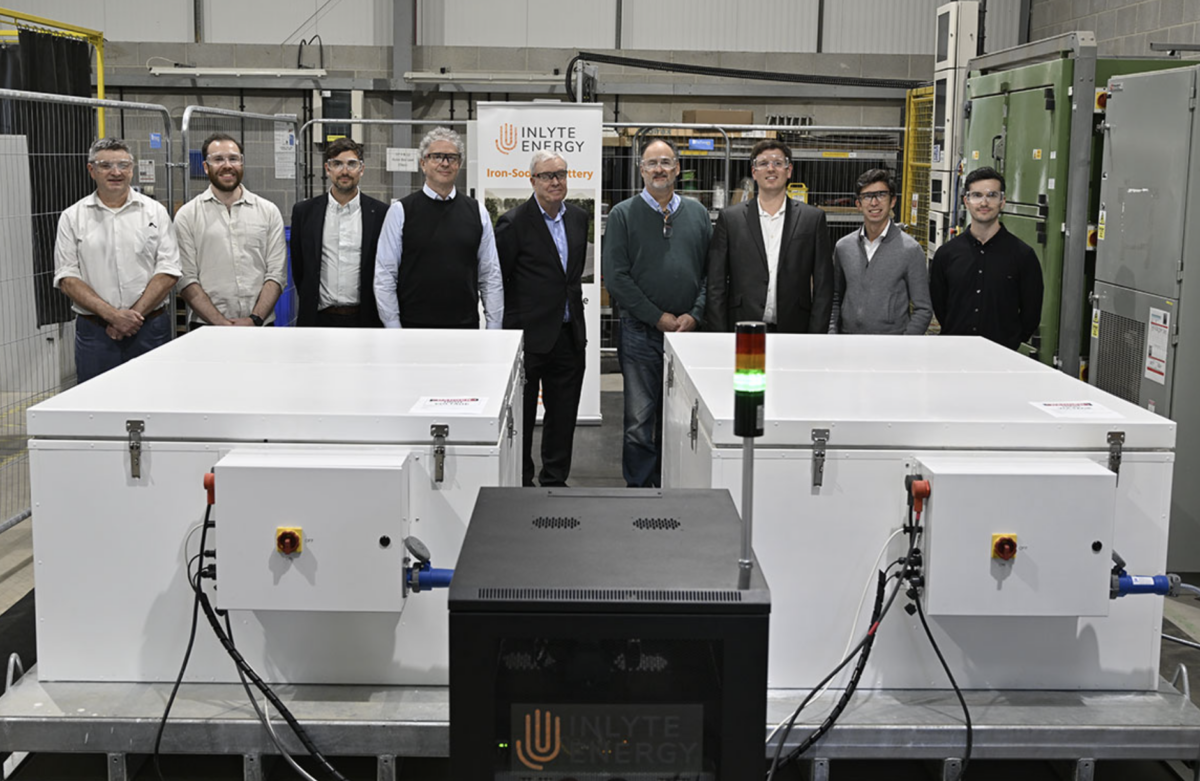
California-based Inlyte Energy plans pilot projects in Switzerland and the United States this year to demonstrate its iron-sodium battery technology for data center and utility-scale energy storage applications.
California-based sodium-iron battery startup Inlyte Energy is preparing to deploy its technology in two major pilot programs in 2026, aiming to prove the systems’ viability as a safe, long-lasting backup power source.
The company is specifically targeting the fast-growing data center market and is positioning its technology as an alternative to fossil fuel generators and conventional lithium-ion batteries.
It plans to deploy a 600 kWh (25 kW) pilot plant with Swiss data center operator NTS Colocation in a Tier IV facility in Bern, Switzerland by the end of 2026, with the aim of evaluating the system’s performance and integration with the facility’s existing systems.
If the first installation is successful, the partners plan to deploy up to 2 MW of iron-sodium battery capacity at the NTS facilities by 2028.
According to Inlyte Energy CEO Antonio Baclig and Chief Commercial Officer Ben Kaun, who spoke pv magazine USA About the plans, the company’s iron-sodium battery technology is ideally suited to the unique needs of data centers, which demand always-on uptime and require secure energy storage technology that can mitigate the volatile nature of their power needs.
Kaun pointed out that it is common for data centers to use diesel generators and other fossil fuel-based generation on-site because these energy sources can better handle their volatility and operate longer during extended outages than short-lived, lithium-based energy storage.
However, the diesel generators and gas turbines used in many data center facilities create carbon emissions and noise pollution, and require on-site fuel storage, leading to resistance from nearby communities.
Inlyte says data center operators should be looking for something that addresses all of these concerns: meeting data center needs for storage duration, ability to handle volatility and security.
“Replacing diesel generators is something that a lot of data center companies want to do,” says Baclig, noting that Microsoft has even made a pledge to stop using the technology by 2030. “But there’s no good alternative right now in terms of the economics and the practicalities of having such a long backup duration. It’s something where we feel like we’re a really good fit.”
Baclig said the company’s battery architecture contributes to its exceptionally long lifespan and ability to handle the variable power demands of data centers. The company currently estimates that the batteries will have a lifespan of 7,000 cycles, good for twenty years of use.
In addition to its long lifespan, Kaun says the battery is not at risk of fire or thermal overflow, which is a problem for other electrochemical energy storage technologies such as lithium.
“Our technology actually has an intrinsic safety whereby cells themselves, when broken or shorted internally, do not lead to a thermal runaway situation and fire and/or explosion. In fact, the modules can continue to operate even if the cell fails internally.”
Kaun said this allows the batteries to be installed in dense physical configurations, allowing the company to deploy up to a gigawatt hour of energy storage capacity per hectare.
Domestic pilot
In addition to Inyte’s data center pilot, the company will also deploy its first integrated utility demonstration system in partnership with Southern Company, a utility company with operations in several southeastern states, whose executives attended a demonstration of Inlyte’s technology in Britain last year.
The Inlyte battery will be installed at an energy storage test site in Wilsonville, Alabama, and will undergo at least a year of rigorous evaluation.
As pilot programs get underway, Inlyte is also establishing a domestic manufacturing footprint in the United States. The company is partnering with Horien Salt Battery Solutions to open its first domestic production facility, targeting an initial capacity of 2 GWh.
Baclig said the company is excited to begin sourcing materials domestically, and batteries from its U.S. factory will contain 70% domestic content. To that end, Inlyte recently announced it would collaborate with metal materials company Ervin Industries to develop new iron powder formulations for its batteries.
Commercial shipments of domestically produced Inlyte batteries are planned for 2027.
This content is copyrighted and may not be reused. If you would like to collaborate with us and reuse some of our content, please contact: editors@pv-magazine.com.
