

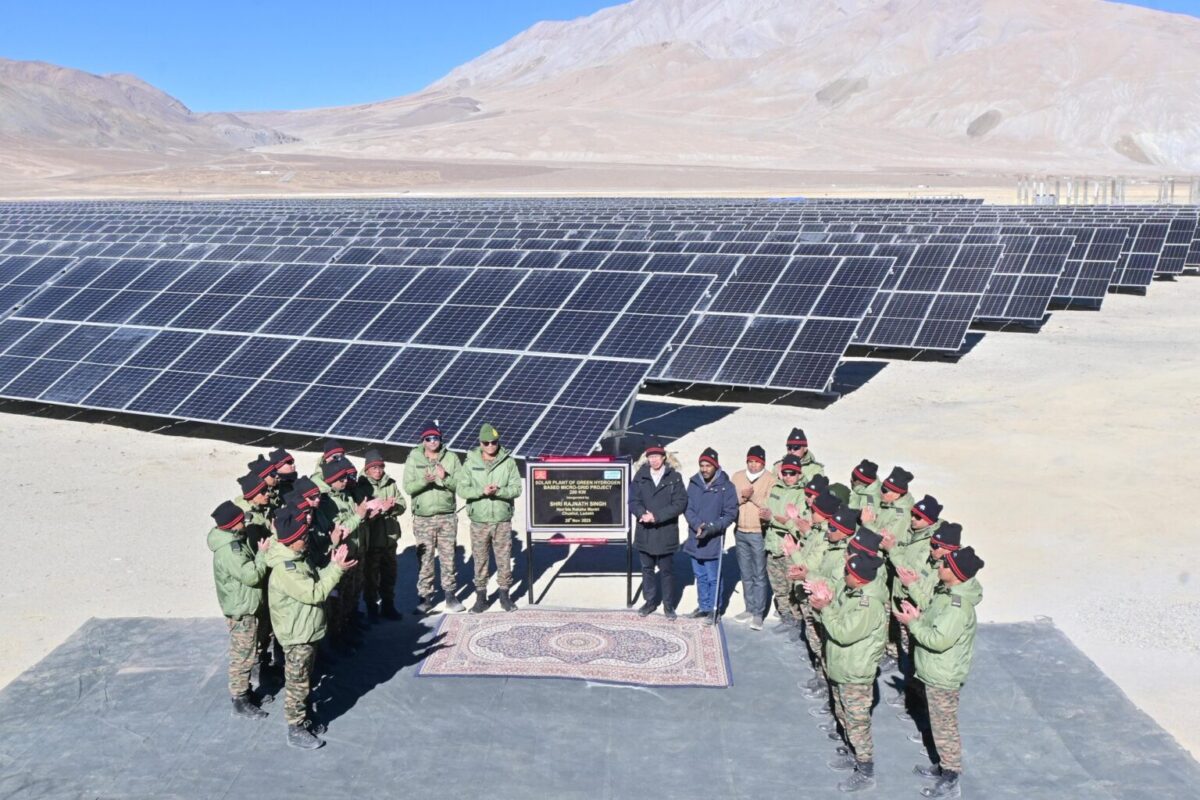
Indian state-owned power producer NTPC has announced that it has inaugurated a 3.7 MW solar power plant that is a key part of the solar-hydrogen battery energy storage systems (BESS)-based microgrid project in Chushul, Ladakh, northern India.
The project was jointly developed by NTPC and the Indian Army. The microgrid includes a 3.7 MW solar PV plant to supply power to the 200 kW load and produce hydrogen, a proton exchange membrane (PEM) electrolyser for hydrogen generation, hydrogen storage facilities, a battery energy storage system (BESS) for short-term continuous power supply and emergency operation, and a fuel cell system capable of generating 200 kW of electrical power.
NTPC noted that the project was commissioned in a record time of eight months, despite the challenging high-altitude terrain.
The solar-hydrogen-based microgrid will replace the diesel generator sets currently used at remote Army locations, reducing CO2 emissions and enabling a cleaner, more reliable energy supply for the region. By supporting local production and use of green energy, the project eliminates the need to transport fuel from the plains, strengthening energy security and easing logistics burdens, the Indian utility said.
For every three units of energy produced, a liter of diesel is avoided that would otherwise be transported to these remote stations in the Himalayas.
“NTPC has designed a standalone microgrid using hydrogen as a storage medium to provide 200 kW of power at any time of the day, all year round. Located at an altitude of 4,500 meters, where winter temperatures drop to -40 C, this is the world’s most unique project of its kind,” the company said. “Once fully operational, it is expected to be a major step towards decarbonizing the defense sector in high-altitude regions.”
This content is copyrighted and may not be reused. If you would like to collaborate with us and reuse some of our content, please contact: editors@pv-magazine.com.
Popular content

