

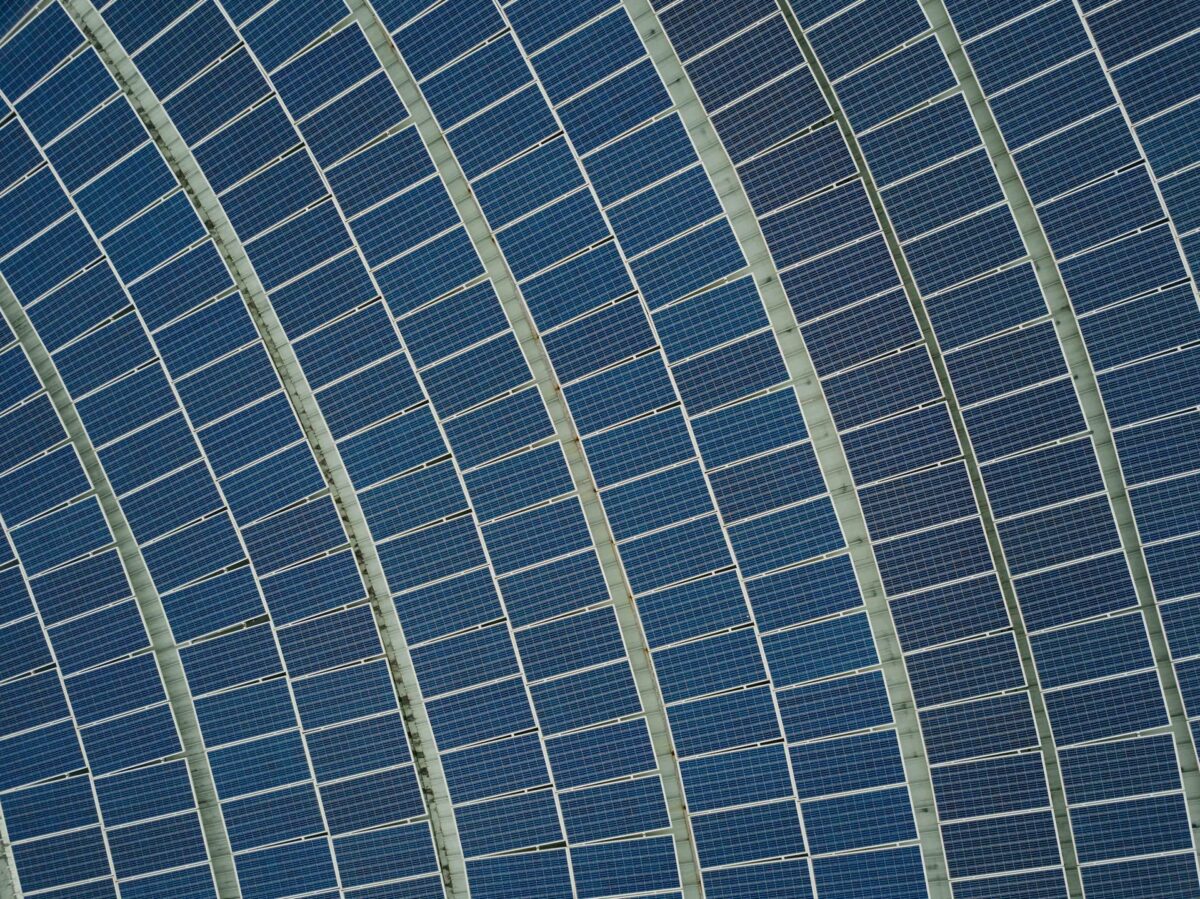
BloombergNEF says in a new report that solar and wind energy need to achieve the most emissions reductions before 2030 to stay on track for a net zero scenario by 2050. The net zero scenario aims for a combined solar and wind capacity of 31 TW by 2050.
A new report from BloombergNEF says reaching net zero by 2050 depends on tripling renewable energy capacity between now and the end of the decade.
It’s the newest New energy prospects presents a path to a net-zero scenario in 2050, the ‘Net-Zero Scenario’ (NZS). It says the window to achieve the goal is “fast closing,” but adds that there is still time “if decisive action is taken now.” BloombergNEF warns that this won’t be possible without accelerated spending, with a fully carbon-free global energy system estimated to have a price tag of $215 trillion by 2050. To reach net zero by 2050, progress over the next decade is “critical,” according to the report.
“The 2024-2030 period will be dominated by rapid decarbonization of the energy sector, an increase in energy efficiency and a rapid acceleration of carbon deployment and storage,” the report said. “Wind and solar energy alone are responsible for half of the emissions reduction over this seven-year period.”
It explains that as renewables will drive the bulk of emissions reductions this side of 2030, there will be more time to tackle ‘hard-to-abate’ areas such as steelmaking and aviation, where cost-competitive low-carbon solutions are still need to be scaled up.
BloombergNEF’s NZS says that while the deployment of renewables will continue into the 2030s, the focus will shift to electrification, with electrifying end-uses in industry, transport and buildings accounting for 35% of avoided emissions in this period. It is then predicted that the 2040s will rely on a mix of different technologies aimed at hard-to-abate sectors, where hydrogen will be responsible for 11% of emissions reductions.
The report lists nine technology pillars for a net-zero world, which could help address different elements of the carbonization challenge. BloombergNEF says four of the nine pillars – renewables, energy storage, electricity grids and electric vehicles – are already “mature, commercially scalable technologies with proven business models.” These are described as technologies that require significant acceleration to get on track for net zero emissions, but there is little to no technology risk, economic premiums are small or non-existent, and financing models are already at scale.
To reach net zero, the NZS aims for combined solar and wind capacity to reach 31 TW by 2050, meaning capacity must triple from today to 2030, and then triple again from 2030 to 2050. It also sets targets that installed battery storage capacity will reach 4 TW, more than 50 times the 2023 level, and that the world’s electricity grids will reach 111 million km in length, almost double today’s.
BloombergNEF says its NZS will need 2.9 million square kilometers of land for onshore solar and wind projects by 2050, almost 15 times more than was used by the two technologies in 2023.
It warns that land restrictions in some countries – namely South Korea, Vietnam and Japan – could mean that the total land area suitable for solar construction could become saturated, indicating that a greater share of less land-intensive technologies will be needed. The report says one solution could be to use land for solar energy, which could also be used for crops.
“How these segments compete for and coexist on the same land will shape future permitting and zoning rules, especially if the rollout of low-carbon technologies threatens food security,” the report predicts.
BloombergNEF also says that whether the world moves toward net zero or whether it ultimately proves to be a step too far, “the era of fossil fuel dominance is coming to an end.” The report predicts that even if the transition to net zero is driven solely by the economy and there are no further policy drivers to help, renewables could still account for a 50% share of electricity generation by the end of this decade.
This content is copyrighted and may not be reused. If you would like to collaborate with us and reuse some of our content, please contact: editors@pv-magazine.com.
