

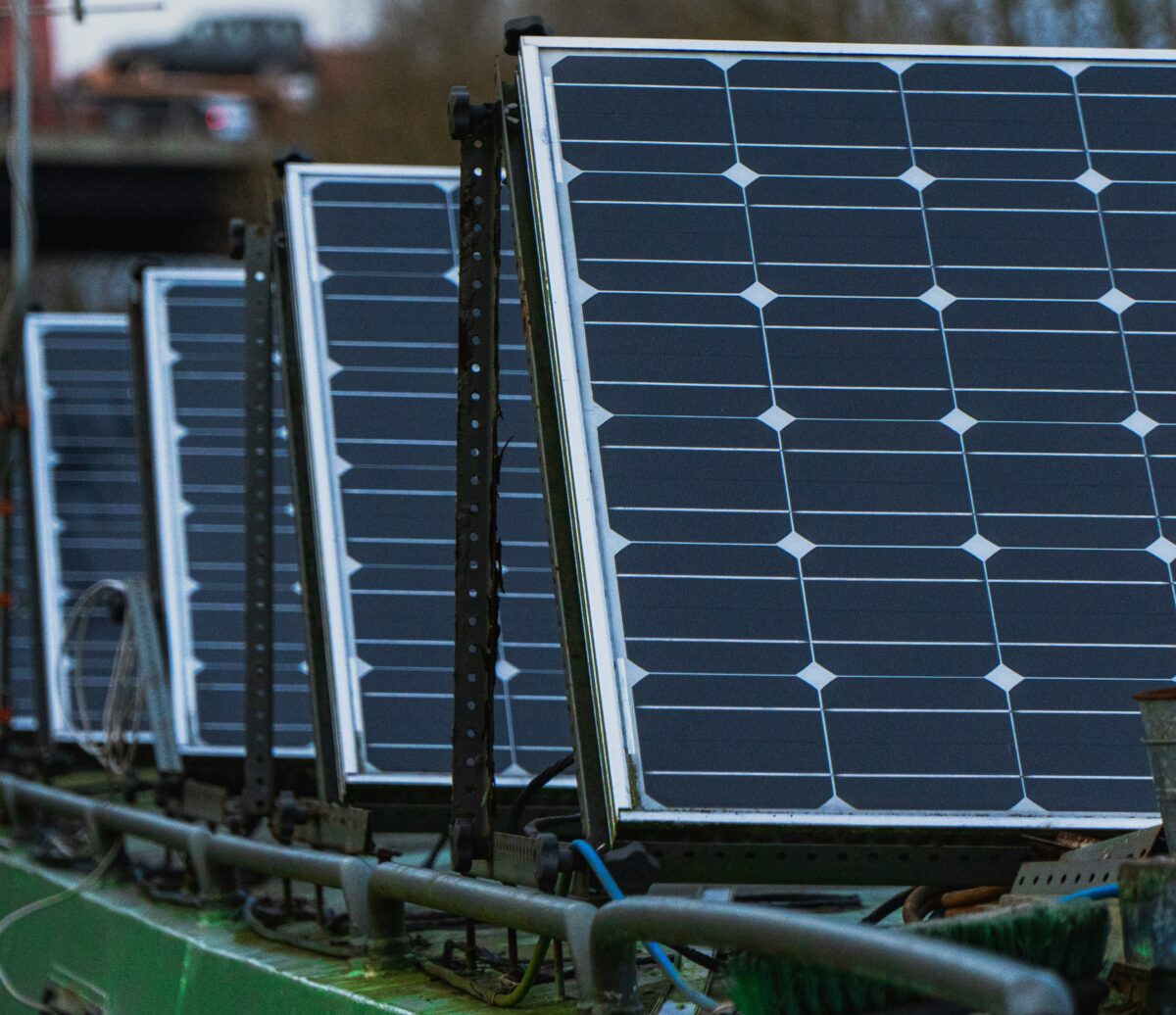
A Chinese-Italian research team has analyzed the influence of different tilt angles on the thermal failure of photovoltaic facades or roofs in the event of fire, finding that when the tilt angle exceeds 30 degrees, the time to failure increases significantly.
A group of researchers from China and Italy tested the influence of different tilt angles on the thermal failure of PV modules. They found that using a tilt angle greater than 30 degrees increased the time to failure.
Using a uniform radiant panel and an experimental setup of an inclined panel, the scientists monitored thermal glass breakage, surface temperatures, incident heat flux and failure characteristics. They also simulated the setup in a finite element method (FEM) model, measuring the average error.
“PV modules are composed of glass, a vulnerable material that can quickly break or fail in the event of fire. Due to glass cracking, the flammable materials of PV panels would directly receive fire radiation and access oxygen, thus facilitating the failure of PV systems. Furthermore, once the glass in the photovoltaic module breaks and falls out, the exposed part of the photovoltaic facade can turn into a large flammable surface,” the group said. “Yet, the performance of PV panels at different tilt angles has not been tested, despite their widespread use and relevance.”
The group used a 600mm x 600mm propane-fired radiant panel as a uniform thermal source. In contrast, the team installed a PV mounting system made of a galvanized steel frame that could withstand temperatures up to 1200 C. They installed monocrystalline silicon PV panels measuring 300 mm x 300 mm, including a 3.2 mm thick annealed, non-tempered glass layer. A total of 15 panels were tested, three for each slope scenario of 0°, 15°, 30°, 45° and 60°.
The analysis showed that when the PV panels are exposed to thermal radiation, the glass cracks typically occur at the edge of the maximum temperature difference on the fire-exposed surface. It also showed that, due to the existence of converged ribbons at the bottom of the PV panel, cracks tended to originate there instead of panel edges when the slope was greater than 45°.
In addition, flammable gas bubbles were found between the glass layer and the solar cell layer, as well as between the backplate and the solar cell layer, which the scientists said could potentially be ignited with a spark or in an actual fire.
Furthermore, the measurements showed that the average time to first failure of PV panels showed an increasing trend when the panels had an inclination angle from 0◦ to 60◦. More specifically, the average time to the first failure was 36 seconds, 33 seconds, 40 seconds, 62 seconds, and 71 seconds for the 0°, 15°, 30°, 45°, and 60° slope scenarios, respectively.
“The time to failure increased significantly when the PV panels were tilted further above 30 C, which is a critical tilt angle for thermal failure of the PV panel,” the academics said. “Although the failure times were different in all cases, the critical temperature differences were close, ranging from 61 to 84 C, and most cracking occurred within 8-15 kW/m2.”
The group then developed a numerical FEM model of the system under the Abaqus software, limiting the simulation to 100 seconds since the first glass break would occur during this period. Compared with the experimental results, the FEM model achieved an average error of 13.5% for temperature distributions and less than 15% for first failure times.
“Considering the problems caused by the gas bubbles of ethylene vinyl acetate (EVA) and the expansion of Tedlar-polyester-Tedlar (TPT), this agreement suggested that the thermal model could predict the temperature fields of PV panels,” the scientists concluded. “The assumption of a rising temperature in three layers has proven to be suitable for cases with large tendencies.”
The results are presented in “Performance of photovoltaic panels with different slopes under uniform thermal load”, published in the International Journal of Thermal Sciences. Scientists from China University of Science and Technology of China and Italy’s University of Trieste conducted the research.
This content is copyrighted and may not be reused. If you would like to collaborate with us and reuse some of our content, please contact: editors@pv-magazine.com.
