

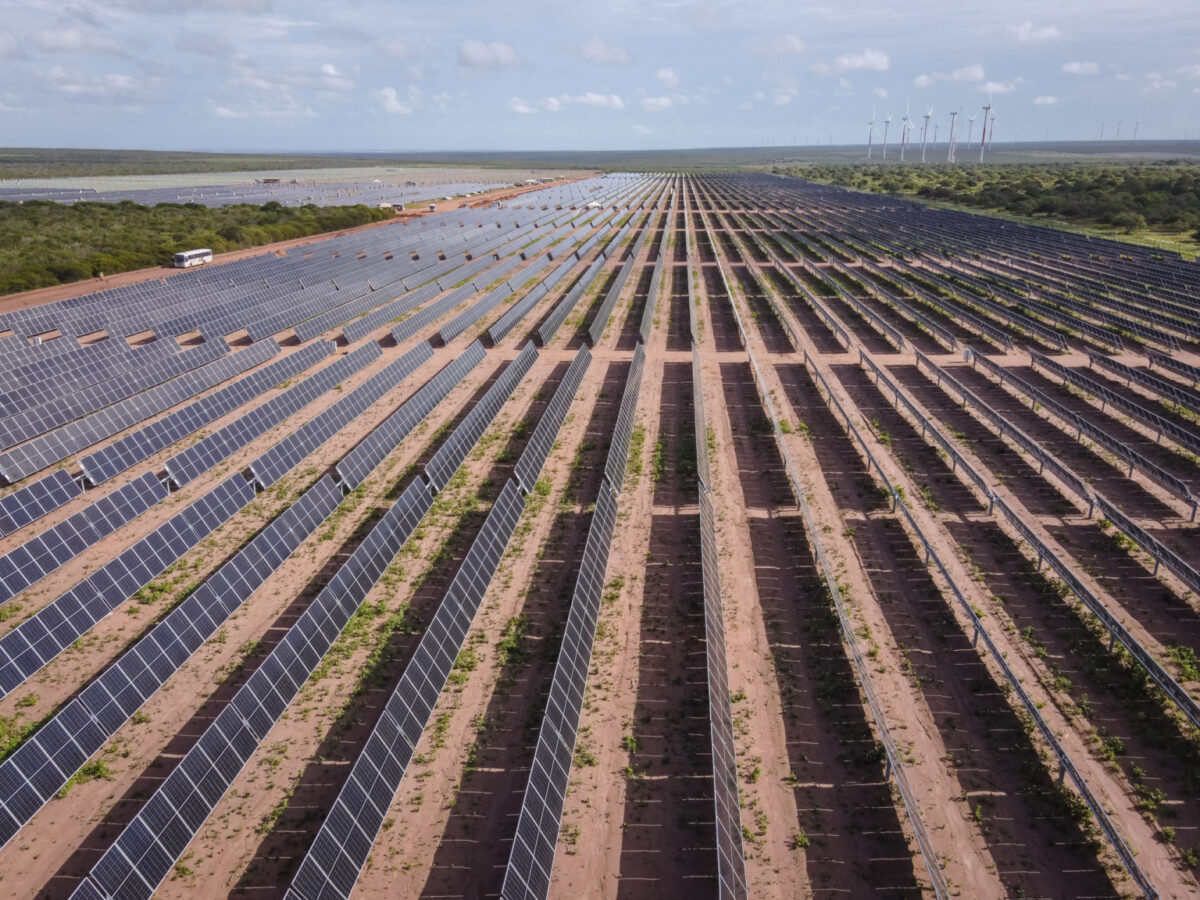
A study comparing power purchase agreements and solar self-generation in Brazil’s open market shows that direct investments in photovoltaic plants can reduce costs by as much as 32.9%, with solid returns but higher risk exposure. While regulatory exemptions significantly improve project economics, self-generation remains sensitive to costs, market prices, and policy changes that can impact long-term viability.
Researchers from the Federal University of Ceará and the Federal University of São João del-Rei assessed contracting strategies in Brazil’s Free Contracting Environment (ACL), comparing power purchase agreements (PPAs) with self-production of solar photovoltaics for large industrial consumers.
Using stochastic models, the scientists found that direct investment self-production, where the consumer finances, builds and operates their own solar power plant, offers the highest potential cost savings compared to PPAs in the long term. The analysis also took into account alternative structures for self-generation, including matching and leasing arrangements.
The results indicated that self-production through direct investment can reduce costs by up to 32.9% compared to PPAs. This option also provides a payback period of approximately 10 years. The internal rate of return (IRR) ranges from 11.8% to 18.1%, with a most likely value of 15.1%, supporting its economic viability.
However, the study highlights that self-induction comes with higher risk exposure. Project viability is particularly sensitive to capital expenditures, operation and maintenance costs, variability in solar energy resources and short-term fluctuations in electricity prices. In addition, deviations between expected and actual generation can lead to energy surpluses or shortages that need to be settled on the short-term market, affecting cash flow stability.
This research analyzes two case studies. In both cases, a large industrial consumer in Northeastern Brazil, classified as a free market consumer, operated continuously 24/7, with an essentially constant load profile and an average consumption of 29,200,000 kWh/month was considered.
Case study 1 considers energy acquisition through conventional PPAs. The researchers assumed a known base price over a twenty-year horizon, with uncertain annual adjustments, and stochastic modeling was applied to predict future values of the official inflation index and define electricity prices using geometric Brownian motion combined with Monte Carlo simulation. The final monthly cash flow costs include operational costs such as energy contracts, distribution contracts, ACL costs and CCEE fees. The net present value (NPV= results for this case range from BRL 1.323 billion ($264.9 million) to BRL 1.605 billion, with a most likely value of BRL 1.477 billion.
Case study 2 is about self-generation through direct investment in a photovoltaic installation. Fixed parameters include 730 operating hours per month, average daily solar radiation of 5.94 kWh/m²/day, system efficiency of 80%, project life of 20 years and a Minimum Attractive Return (MARR) of 7.5%. Stochastic inputs most likely include photovoltaic system costs of R$2,650/kW and most likely O&M costs of 3%. The photovoltaic installation is so large that it can meet 100% of the consumer’s energy demand. Operational costs include the operation, maintenance, management, distribution costs, energy billing and connection costs of the installation. The NPV results for this case range from BRL 0.925 billion to BRL 1.100 billion, with a most likely value of BRL 0.991 billion.
Regulatory exemptions play a central role in the economic viability of self-generation and compared to PPAs. Self-generators benefit from exemptions from sector charges such as the Energy Development Account (CDE) and the Alternative Electricity Sources Incentive Program (PROINFA), which are reflected in the distribution system tariff (TUSD) usage structure. Higher discount levels on these costs lead to greater NPV savings. For example, a 78.75% discount on TUSD rates results in a 32.90% savings on the most likely NPV.
Self-producers are also exempt from charges such as the Energy Reserve Charge (EER) and the Energy Security Charge (ESE). Maintaining these exemptions, especially when combined with higher unit values for these costs, amplifies the perceived economic benefits, resulting in better IRR and shorter payback period. Lowering the exemption percentages for EER and ESE lowers the IRR and extends the payback period.
Considering a 50% discount on the TUSD demand rate for auto-generators expands the range of achievable prices for auto-generation contracts, allowing for more flexibility in negotiations.
In summary, regulatory exceptions are a crucial factor that can significantly impact the cash flows of self-generation projects, making them more financially attractive compared to PPAs, but also pose regulatory risks due to the possibility of revisions to these conditions.
The study “Economic assessment of long-term power purchase agreements and solar photovoltaic self-generation: case study of a major industry in Brazil”, was published in the Scientific Review Research into electrical energy systems.
This content is copyrighted and may not be reused. If you would like to collaborate with us and reuse some of our content, please contact: editors@pv-magazine.com.
