

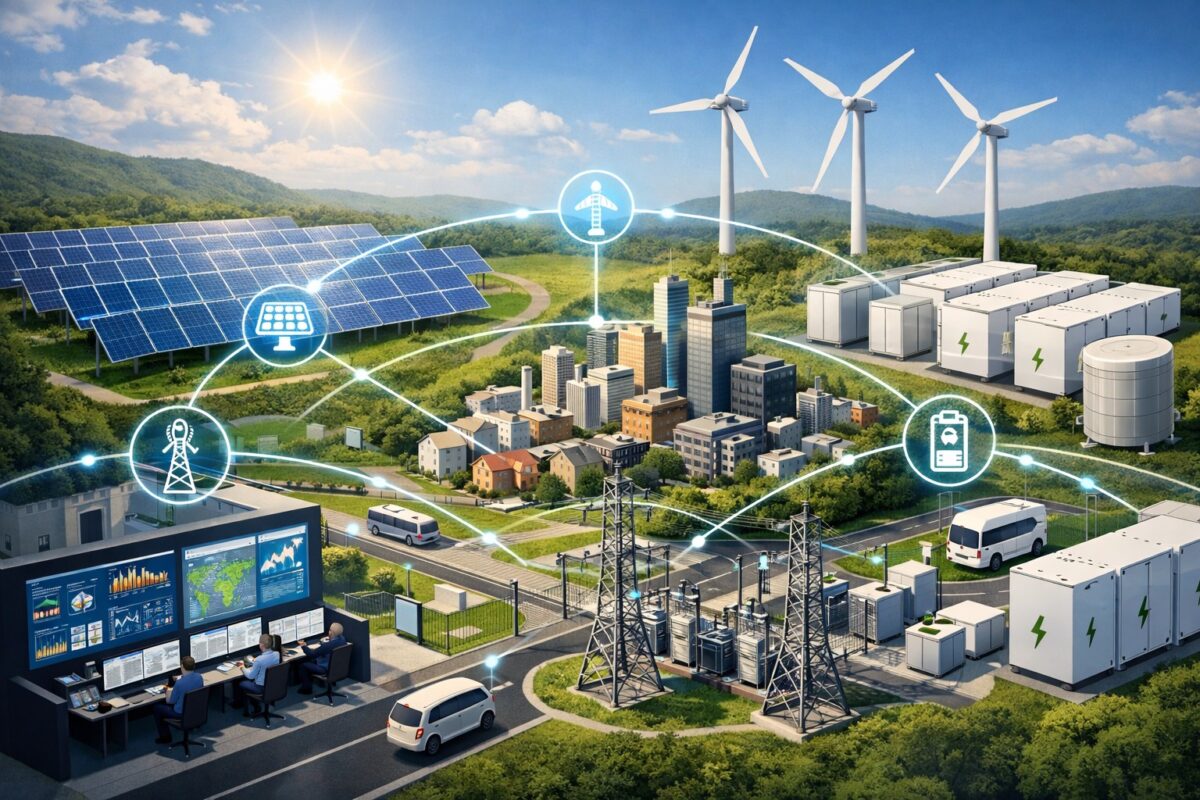
A systems approach is essential for smart energy standardization, ensuring interoperability, avoiding overlaps and addressing complex interactions between the electricity grid, devices and infrastructures. The IEC System Committee for Smart Energy (SyC SE) applies systems-level thinking, using tools such as reference architectures and roadmaps to coordinate standards, support innovation and address emerging areas such as EV integration, digital twins and zero-emission technologies.
A systems approach is indispensable for the standardization of smart energy-related technologies, to avoid overlaps and ensure that the right requirements are met.
As electrical technology evolves and becomes more complex, so does the need to view technologies as part of complete systems. Systems-level thinkers play a critical role in standardization by bridging technical domains, anticipating interactions and dependencies, and ensuring that standards remain coherent, interoperable, and future-proof. For example, electric mobility solutions must take into account the interaction of components and resources such as energy, different infrastructures and changing environments to be most effective for users, industries and the wider community.
The same applies when it comes to the standardization of electrical technology. A holistic and multidisciplinary approach is needed not only to address these systemic challenges, but also to ensure interoperability, integration, security and trust. This is known as systems thinking and the IEC has promoted system-level standardization through a number of systems committees (SyCs), including those for Smart energy, Smart cities, Smart production and more. The IEC SyCs promote inter-committee collaboration, including with other standards development organizations, identify gaps and overlaps in standardization and support this with the development of reference architectures, roadmaps and other standardization tools.
Systems thinking works for smart energy
Pascal Terrien, Chairman of the IEC System Committee for Smart Energy (SyC SE), explains the challenges associated with developing standards for the smart grid and why a systems approach is essential. “Smart energy is about the digitalization of the electricity system and the energy transition. IEC standards support the smart grid and have done so for many years – the IEC has developed standards for data models, interoperability and communications for network management. The scope of the SyC SE is to consider the network as a system and, in addition to electricity, embrace the connection with gas and heat. Our DNA, or ‘raison d’être’, is about coordination and cooperation.”
The Syc SE works with IEC TC 13which sets standards for smart meters, IEC TC 57 which develops many of the smart grid standards, IEC TC8 for electricity supply, and IEC TC 69 about data flows for electric vehicles (EVs). Its purpose is to look for gaps where standards are needed and to avoid overlaps.
It uses a number of tools, including a smart grid architecture model, and a Step-by-step plan for smart energy which Terrien describes as “the radar for smart energy standards!”
Of the many challenges that await us, Terrien believes this is one of the most important priorities meeting the data challenge. “This means that we have to deal with the flow of information between electrical devices and the electricity grid. The final frontier we are looking at today is what happens after the end of the electricity grid – after the smart meters – namely the interaction with end users of electricity, which can be electric vehicles, but also household appliances. The idea is to keep end users informed.”
The SyC has done important work on digital twins to improve data interoperability in the power grid and one of its key focuses is to support the work on flexibility and resilience in the power grid. “We are noticing that many IEC standards developed several years ago are suddenly in the spotlight. We need to bridge the gap between utilities, the electricity grid and consumers. We need new standards to ensure that we have a data flow from the electricity grid to consumer goods,” Terrien emphasizes.
New areas of standardization
The SyC is looking at new areas where standards are required, including Smart hydropower, energy and emission-free buildings, inverters and smart sensors. “The idea is to move quickly and explore these new areas as quickly as possible to provide answers to the standardization community. We need to decide whether we need new working groups or new TCs, or whether existing TCs can address these topics,” says Terrien.
One of the biggest challenges is getting the right experts around the table. “We have many active experts, but we need more, as well as active contacts. For example, we need experts in the field of zero-emission buildings,” he concludes.
Author: Catherine Bischofberger
The International Electrotechnical Commission (IEC) is a global non-profit membership organization that unites 174 countries and coordinates the work of 30,000 experts worldwide. International IEC standards and conformity assessment are the basis of international trade in electrical and electronic goods. They facilitate access to electricity and verify the safety, performance and interoperability of electrical and electronic devices and systems, including, for example, consumer equipment such as mobile phones or refrigerators, office and medical equipment, information technology, electricity generation and much more.
The views and opinions expressed in this article are those of the author and do not necessarily reflect those of the author pv magazine.
This content is copyrighted and may not be reused. If you would like to collaborate with us and reuse some of our content, please contact: editors@pv-magazine.com.
