

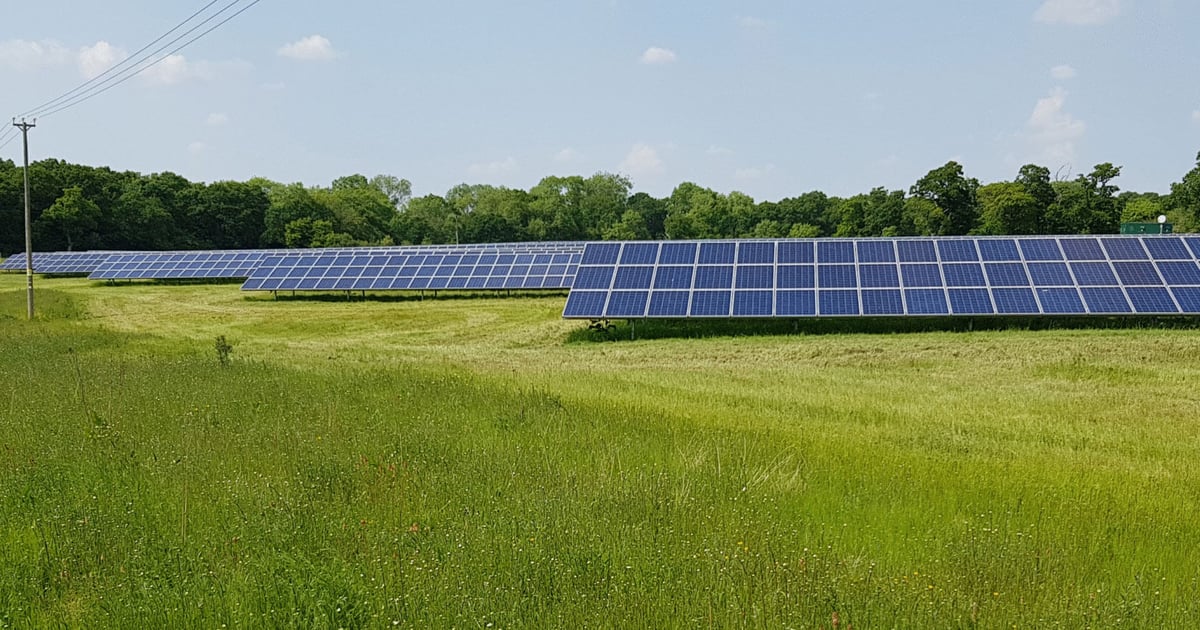
The UK High Court has dismissed a legal challenge brought by a local resident against independent power producer (IPP) BOOM Power, which was granted planning permission to build the 29.7MW Woolley solar PV project in Wakefield, West Yorkshire.
The resident, identified in court documents as ‘Lang J.’, argued that the process by which the local planning authority (LPA) granted planning permission in August 2025 – namely disagreeing with an assessment by the design and conservation officer that local views would be ‘spoiled’ by the installation of solar panels – was flawed.
However, Sir Tim Kerr, a High Court judge, wrote in his conclusion, dated May 29 and published this week by BOOM Power, that Lang’s arguments “have no merit”.
“In my opinion, upon further examination, these grounds lack merit,” Kerr wrote. “As its application and process of examination evolved, different judgments and opinions were formed and held by different parties at different times. This is both normal and lawful; indeed it is a sign of a healthy deliberative process and the LPA’s consideration of its fruits.”
“We are pleased with the court’s decision, which provides further certainty for the Woolley Solar Farm project and confirms the robustness of the planning process,” said Mark Hogan, founder of BOOM Power. “This is an important plan that will contribute to the UK’s renewable energy capacity and net zero ambitions, following thorough and well-tested planning.”
BOOM Power said it expects to complete construction work on the project in “approximately nine months.”
BOOM Power’s victory follows the publication of NPPF
The victory for BOOM Power follows years of uncertainty about the project, for which the IPP first applied for a construction permit in December 2023. The site is within green space to the east of the M1 motorway, opposite the Bretton Hall Registered Park and Garden, a Grade II listed building; At the time, Kerr described this application to build a solar energy project at such a location as ‘ambitious’.
However, the publication of a new National Planning Policy Framework (NPPF) from the government in December 2024 aimed to remove barriers to the deployment of renewable energy projects by urging planning authorities to give “significant weight” to the energy transition benefits associated with new renewable energy installations.
The framework also introduced the so-called ‘grey belt’, areas of land once described as green belts that are considered poor quality land, a category into which the land for the Woolley project fits.
The planning process also noted that implementing the project at this location would likely have “no significant adverse impact.” As a result, the planning committee granted planning permission for the project on August 7, 2025, in line with an assessment by planning officers that “although there would be a change in the character of the field from agricultural to developed as a solar farm, the impact would be localized and the negative impact on the landscape is considered limited.”
It was this August 7 decision that Lang objected to, saying the gray band designation was “a political sleight of hand” that “seeks to circumvent long-term protection of our countryside.” However, the same documents reveal that he was not confident of the success of his appeal, noting that “he expected the development to be allowed”.
Comparable Gray belt projects have been launched through callswith objections like those to BOOM’s project that do little other than delay development and increase costs.
