

Researchers have modeled a hybrid financing scheme that combines contractual and commercial components to improve the financeability of PV battery energy storage system (PV-BESS) assets, using a Bayesian LSTM forecast integrated with a MILP optimization model to assess performance.
A team of researchers from Greece and Türkiye have analyzed a hybrid corporate power purchase agreement (PPA) model for co-located photovoltaic (PV) and battery energy storage systems (BESS). The proposed scheme combines contract and vendor components to balance revenue stability and market exposure, with the aim of improving project financeability while maximizing profits through wholesale market participation.
“The work introduces a new hybrid business and operating model for renewable assets that combines a modern corporate Pay-as-Delivered (PaD) PPA with active market participation,” says researcher Georgios Gousis said pv magazine. “Unlike existing studies, where full generation is contracted or fully commercial, we investigate a semi-contracted, semi-merchant PV-BESS framework. This dual approach increases bankability under a PPA, while maintaining the flexibility to capture additional value in the electricity markets.”
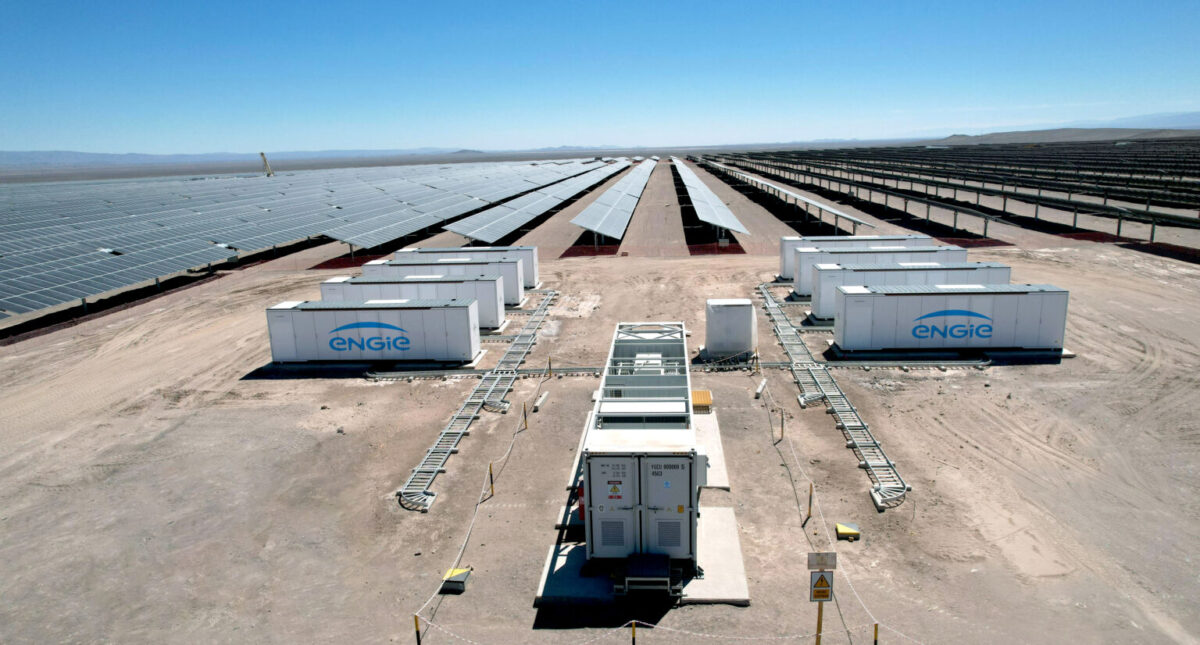
The study models a renewable energy producer (REP) operating a utility-scale photovoltaic (PV) system with a co-located battery energy storage system (BESS) that can optionally charge from the electric grid. In the first scenario, the REP stores excess generation not contracted under the power purchase agreement (PPA), while in the second scenario it also charges the BESS for energy purchased on the day-ahead market (DAM) outside of peak hours. In both cases, the REP deploys stored energy in the DAM and balancing market (BM) in an upward direction, either through the integrated planning process up (ISPup) or the manual frequency restoration reserve up (mFRRup).
To test the plan, the researchers produced one-year ahead forecasts of solar energy production using a long-short-term Bayesian neural network (B-LSTM), which provided results at different confidence levels (CLs) representing the probability of meeting energy targets. They then applied mixed integer linear programming (MILP) to optimize the battery capacity and distribution strategy for both grid scenarios. Combining the B-LSTM and MILP results, the team used a Nash negotiation solution to determine a fair price for a power purchase agreement (PPA).
“The coupling of the Bayesian LSTM probabilistic prediction with a MILP optimization model has not been applied before in this context,” says Gousis.
Image: University of West Macedonia, Renewable Energy, CC BY 4.0
The method was demonstrated using PV data from Kozani, a city in northern Greece. It was tested under different specifications: battery energy storage system (BESS), capital expenditure (capex) ranging from €120 ($140)/kW to €180/kW and operating expenditure (opex) equal to 4% of capex. For the PV system, the capex was €450/kW to €500/kW and the opex was €7.50/kW. The discount rate was set at 4%, 8% or 12%, with a power purchase agreement (PPA) term of 10, 12 or 14 years.
“We found that lowering the certainty level (i.e. contracting less fixed energy) can substantially increase profitability due to greater market exposure, but at the cost of reduced bankability.” Gousis said. “In addition, if there is a shortage of PV power production, the producer must plan market participation up to a week in advance if PPA supply is the highest priority, which is explored in our work.”
“BESS with a lower capex increases the financial viability of the project by allowing flexible storage sizes. Sensitivity analyzes of PPA duration and discount rate show that longer contract lengths significantly increase the net present value (NPV), justify larger BESS capacities and reduce the required PPA price, thereby improving bankability,” the statement said. researchers. “By having the BESS import energy from the electricity grid (Scenario 2), economic performance improves, especially at higher CL values where the producer benefits from price arbitrage.”
The results are published in “Improving the viability and bankability of hybrid RES-BESS systems with company power purchase agreements and electricity market participation.” Researchers from the Greek University of West Macedonia and Turkey’s Sabanci University took part in the study.
This content is copyrighted and may not be reused. If you would like to collaborate with us and reuse some of our content, please contact: editors@pv-magazine.com.
Popular content

