

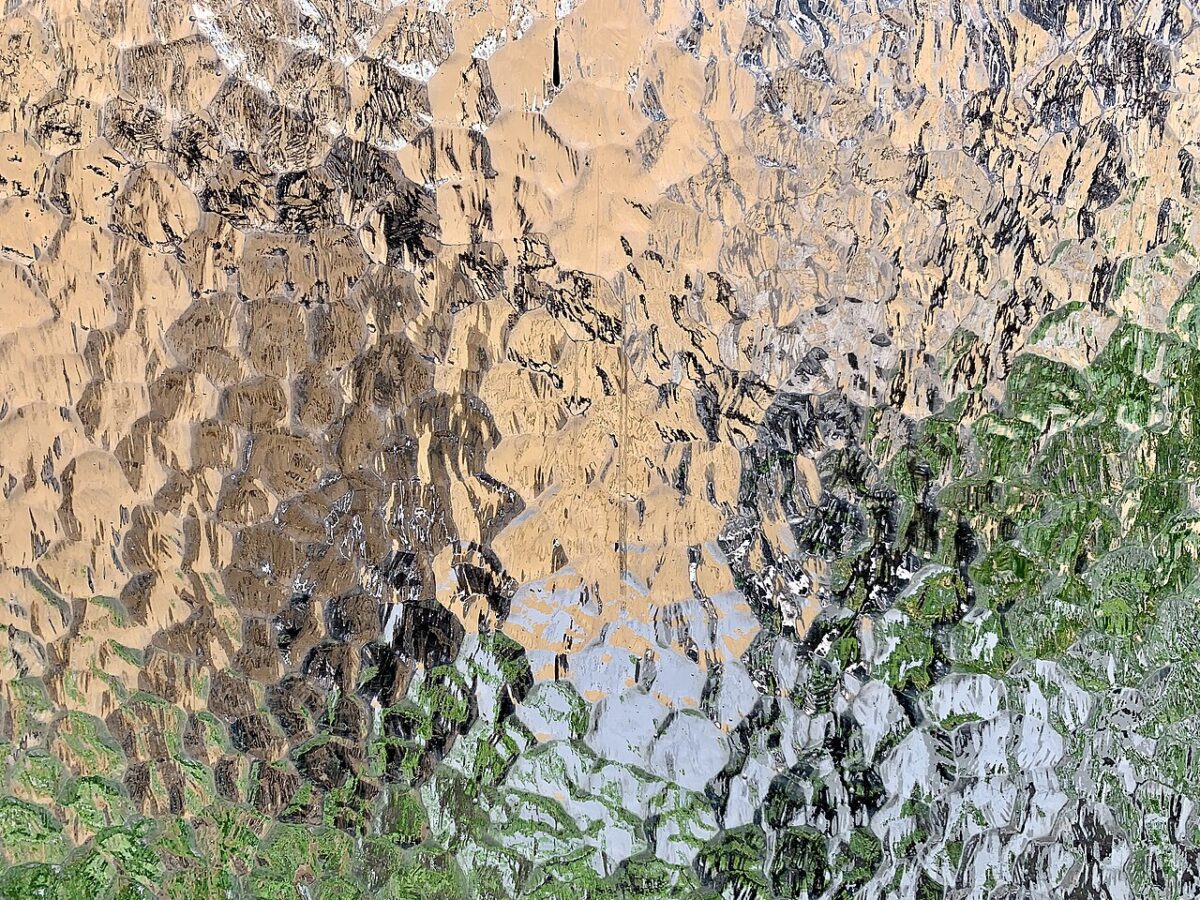
Researchers from Poland have investigated how textured glass used as the front of building-integrated photovoltaic panels affects performance. They have found that energy yield can be up to 5% lower compared to conventional glass-based modules, with reflection parameters up to 88% in the visible area.
Scientists from Poland’s John Paul II Catholic University of Lublin have analyzed the optical and electrical parameters of textured glass in integrated photovoltaic (BIPV) systems and found that this type of glass can significantly influence PV energy generation and increase light reflection.
“In the case of installations in urban spaces, an important parameter is the low reflection value and thus the reduction of light reflections that can dazzle motorists,” says Paweł Kwaśnicki, the lead author of the study. “As BIPV becomes more and more popular and the scope of its installation on facades, building walls and different types of glazing is expanded, its aesthetic aspects become one of the most important parameters.”
Textured glasses are made by heating sheets of glass, softening them and then passing them between engraved rollers. For his research, the academics used two commercially available textured glass plates. The first sample had a surface topography with height differences of 45 μm, while the second sample was in the range of 10 μm. Sample 1 had a regular pattern, with features 400 μm in diameter, while in the case of sample 2, the pattern was irregular, with features ranging from 50 μm to more than 1 mm.
A total of three modules were built: one with sample 1, the other with sample 2 and the last with clear reference glass. In all cases, a laminating foil was placed between the glass and the cell, which measures 2.89 W when encapsulated. The bare cell fill factor was measured at 71%, the open-circuit voltage was 0.699 V and the short-circuit current was 5.83 A.
“The calculation showed that the direct solar absorption value for the reference sample was almost 13 and 5 times lower than sample 1 and 2, respectively,” the researchers said. “For both textured samples, the transmittance in the near-infrared (NIR) region was significantly lower than the reference glass. Moreover, for the sample with a regular surface pattern (sample 1), a slightly lower transmittance in the infrared (IR) region was noted compared to the non-regular surface (sample 2). A significantly lower reflectance in the visible light (VIS) region was measured: 8.5x lower for sample 1 and 1.6x for sample 2.”
In terms of electrical performance, the reference cell measured a maximum power of 2.86 W; sample 1 had 2.79 W and sample 2 had 2.74 W. Fill factor, open circuit voltage and short circuit current for the reference module were 72.4%, 0.73 V and 5.425 A respectively. Sample 1 had 72.9%, 0.727 V and 5.27 A, while sample 2 had 73.2%, 0.728 V and 5.143 A.
The analysis showed that the energy yield in the modules using textured glass could be up to 5% lower compared to modules based on conventional glass, with reflection parameters up to 88% in the VIS area.
“Since infrared radiation has several negative effects on silicon photovoltaic cells, including limited energy absorption, thermal effects leading to reduced efficiency, material limitations and optical losses due to carrier recombination – the application of textured glass in PV modules is profitable,” concludes the research. academics.” In addition, long-term exposure to IR radiation can accelerate material degradation, which affects the stability and service life of PV modules.”
Their findings were presented in “Textured glass in the application of architectural solar photovoltaics”, published in Cleaner technology and technology. In addition to the John Paul II Catholic University of Lublin, Kwaśnicki is affiliated with the Polish PV supplier ML System.
This content is copyrighted and may not be reused. If you would like to collaborate with us and reuse some of our content, please contact: editors@pv-magazine.com.
