

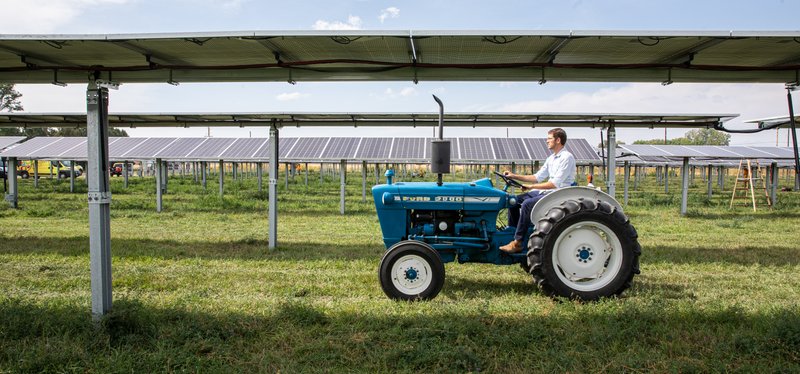
The United States Department of Agriculture is investing more than $120 million in this project renewable energy projects in 44 states. The funding is aimed at lowering energy costs, generating new revenues and creating jobs for America’s farmers, ranchers, agricultural producers and small rural businesses.
Most projects are funded through the Inflation Reduction Act, through the Rural Energy for America program. This initiative advances President Joe Biden’s “Investment in America” agenda to grow the U.S. economy by increasing competition in agricultural markets, lowering costs and expanding clean energy.
“Under the Biden-Harris Administration, USDA is committed to ensuring that farmers, ranchers and small businesses directly benefit from both a clean energy economy and a strong U.S. supply chain,” said USDA Secretary Tom Vilsack. “The investments announced today will increase access to renewable energy systems and domestic fertilizers, while creating good-paying jobs and saving people money that they can then invest back into their businesses and communities.”
This announcement comes just weeks after the USDA has selected Midwest Electric Cooperativelocated in Grant, Nebraska, and the village of Emerson, Nebraska, as two of the first applicants to advance in the awards process through the Enabling affordable clean energy program. Midwest Electric Cooperative will build solar renewable energy facilities and energy storage systems for the communities in Wallace, Grant, Paxton and Lakeview. The Village of Emerson plans to use the money to finance a solar energy facility that will distribute clean energy to the Winnebago Tribe.
National production of clean energy
Through the REAP program, USDA provides grants and loans to help rural agricultural producers and small business owners expand their use of wind, solar and other forms of clean energy and improve energy efficiency. These innovations help them increase their income, grow their business, tackle climate change and reduce energy costs.
The REAP program is part of Biden’s Justice40 initiativewhich set a goal of delivering 40% of the total benefits of certain federal investments to underserved communities marginalized by underinvestment and overburdened by pollution.
These investments will reduce energy costs for farmers and agricultural producers, which can instead be used to create jobs and new income streams for people in their communities. For example:
- In Maine, Moorit Hill Farm will install a 40.95 kW rooftop solar system. The system will save the farm more than 50,000 kWh per year, equivalent to approximately 100% of the farm’s energy consumption.
- In California, Crystal Farms Local Solar II LLC will use a $520,000 rural development investment to help the San Joaquin agricultural producer. The project funds will be used to help offset the costs associated with installing an energy-efficient solar photovoltaic system. The system is estimated to produce 2,877,238 kWh per year.
- In Indiana, Stephen Sanders’ turkey farm in Dubois will install a 51.84 kW solar array. The array will generate 70,322 kWh annually, saving the company $7,190 per year.
USDA presents the REAP awards in Alabama, Alaska, Arkansas, California, Colorado, Connecticut, Delaware, Florida, Georgia, Hawaii, Idaho, Illinois, Indiana, Iowa, Kansas, Kentucky, Louisiana, Maine, Maryland, Massachusetts, Michigan, Minnesota, Mississippi, Missouri, Montana, Nebraska, New Hampshire, New Jersey, New Mexico, North Carolina, North Dakota, Ohio, Oklahoma, Pennsylvania, Rhode Island, South Carolina, South Dakota, Tennessee, Utah, Vermont, Virginia, Washington, Wisconsin and Wyoming.
Since the start of the Biden-Harris administration, USDA has invested more than $1.8 billion through REAP in more than 6,000 renewable energy and energy efficiency improvements that will help rural business owners reduce energy costs, generate new revenue and strengthen the resilience of their activities.
USDA continues to accept REAP applications and will hold funding competitions quarterly through September 30, 2024. The financing includes a special portion for underutilized renewable energy technologies. For more information on application deadlines and submission details, see page 19239 of the March 31 Federal Register.
Listen to more in-depth conversations on Solar Builder’s YouTube channel
Our most popular series include:
Power forward! | A collaboration with BayWa re to discuss industrial topics at a higher level.
The buzz | Where we give our 2 cents per kWh in the residential solar market.
The pitch | Discussions with solar manufacturers about their new technology and ideas.
Source link
